
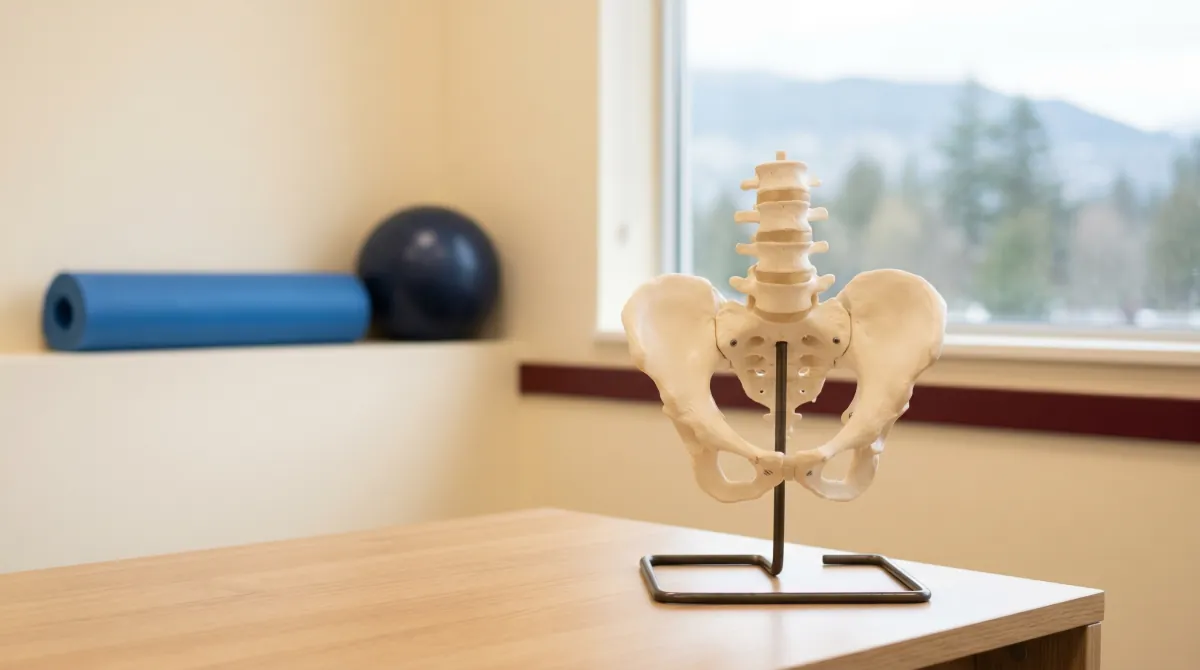
Pelvis & SI Joint
Lower Back & Pelvic Pain | North Vancouver
The deep ache low and off to one side that flares when you stand on one leg, roll over in bed, or get up after a long sit. When the SI joint and pelvis are involved, the plan looks different from ordinary low-back care.
What it is
Understanding your lower back / pelvic pain.
Lower back and pelvic pain often travel together. It can read as a dull ache low down and off to one side, or as a deeper, sharper discomfort around the back of the pelvis, and it commonly spills into the buttock, hip, or thigh. The people we see with this pattern tend to fall into a few groups: those with sitting-heavy jobs, athletes loading the pelvis hard, and those who are pregnant or recently postpartum. At Medstar Sport Physio in North Vancouver, we assess and treat this through a one-on-one physiotherapy appointment, confirming the pattern and building a plan from there. We see patients from across Vancouver and the North Shore, many of whom cross Lions Gate Bridge or take the SeaBus for treatment here.
The driver is usually a mix of joint, muscle, and posture factors centred on the pelvis rather than the lumbar discs. The sacroiliac joints, where the spine's base meets the pelvis, can become irritated and start referring pain. Muscle imbalances through the hips, deep core, and pelvic floor create uneven pulls, and a long history of sitting or one-sided loading lets some muscles tighten while others switch off.
Pregnancy and the postpartum stretch amplify all of this. Hormonal changes loosen the pelvic ligaments, the growing load shifts the centre of gravity, and the deep core and pelvic floor have to relearn how to stabilize afterward. This is mechanical, common, and treatable, and it's a different conversation from a straightforward lumbar strain.
What to expect
SI-joint and pelvic patterns usually respond over four to eight weeks, with the sharp catches easing first and the staying power arriving as the deep stabilizers come back online. Pregnancy-related pelvic pain can be managed well through pregnancy and tends to settle further afterward with the right postpartum progression. We pace everything to your stage, because there's no rushing a deep-core return.
Get a plan
Not sure if we're the right fit?
Send us a quick note about what's going on. A physiotherapist will read it personally and reply with what they'd recommend. No commitment to book.
Common questions
About lower back / pelvic pain.
How is this different from regular low back pain?
Ordinary low back pain usually centres on the lumbar spine and the discs, and often worsens with bending and sitting. Pelvic and SI-joint pain sits lower and off to one side, flares with single-leg loading (stairs, standing on one leg, rolling in bed), and responds to stability work for the pelvis rather than the lumbar-focused plan on our low back page.
I'm pregnant and my pelvis aches constantly. Is physio safe?+
Yes, and it's one of the most useful things you can do. We use pregnancy-appropriate hands-on techniques, gentle stability work, and positioning and support strategies for sleep and daily activity. Everything is paced to your trimester, and we coordinate with your maternity care provider when that's helpful.
I sit at a desk in Lower Lonsdale all day and the pain is worse by evening. What helps?+
Long static sitting lets the deep stabilizers switch off and loads one side of the pelvis. The fix is a setup review, regular position changes, and a short daily activation routine for the core and glutes. Most desk-driven pelvic pain improves a lot once the sitting load is broken up and the stabilizers are working again.
Who tends to get this kind of pelvic and SI-joint pain?+
Three groups mostly: people with sitting-heavy jobs, athletes loading the pelvis hard in training, and those who are pregnant or recently postpartum. The pattern is usually a mix of joint, muscle, and posture factors centred on the pelvis, and a long history of sitting or one-sided loading lets some muscles tighten while others switch off.
How long does treatment for SI joint or pelvic pain take?+
Most SI-joint and pelvic patterns respond over four to eight weeks, with the sharp catches easing first and the staying power arriving as the deep stabilizers come back online. Pregnancy-related pelvic pain can be managed well through pregnancy and tends to settle further afterward with the right postpartum progression, paced to where your recovery actually is.
What does treatment for pelvic and SI-joint pain actually involve?+
We target the sacroiliac joints directly with mobilization, ice, heat, or gentle electrotherapy to calm the one-sided ache, then retrain deep-core and pelvic-floor activation, the stabilizers that actually hold the pelvis steady. Hip and glute strengthening evens out the muscular pulls that keep tilting the pelvis, and postpartum-aware progression paces the rebuild for anyone recovering after birth.
Could a leg-length or foot issue be causing my pelvic pain?+
It's possible. Uneven leg length or foot alignment can feed pelvic asymmetry by loading one side of the pelvis more than the other over time. We include a custom orthotic assessment as part of treatment when that pattern looks like it's contributing to your SI-joint or pelvic pain.
I'm an athlete and my pelvis hurts during training. Is this the same thing?+
Yes, pelvic and SI-joint pain shows up in athletes loading the pelvis hard, not just sitting-heavy jobs or pregnancy. The mix of joint, muscle, and posture factors is the same, so treatment still centres on sacroiliac joint mobilization plus deep-core, pelvic-floor, and glute retraining rather than a general low-back plan built for a different cause.

Reviewed by Amir Ahmadi, PhD, MSc PT, Registered Physiotherapist, Certified IMS Therapist, College of Physical Therapists of British Columbia (CPTBC). Last reviewed July 2026.
This page is for general information only and does not constitute medical advice, diagnosis, or treatment. Individual presentations vary, and assessment findings and treatment plans differ from person to person. If you are experiencing severe symptoms, neurological changes (numbness, weakness, bowel or bladder changes), or a significant trauma, contact your physician or emergency services. Physiotherapy at Medstar Sport Physio & Health is provided by physiotherapists registered with the College of Physical Therapists of British Columbia (CPTBC).
Related reading
- Low back pain & sciatica: the lumbar and leg-pain page →
- Back pain: the whole-spine overview, if you're not sure where yours fits →
- Custom orthotics: when foot or leg alignment feeds pelvic asymmetry →
- Kinesiology: graded strengthening to keep the pelvis stable long term →
- Hurt your back in a crash? ICBC covers physio with no upfront cost →