Trigger Finger: Why Your Finger Catches, and What to Try Before an Injection
A finger that catches, clicks, or locks when you bend it is trigger finger. Caught early, it often responds to splinting and load changes before any injection.
BY ALI SHAFIEI, RPT
A finger that catches, clicks, or locks when you bend it is unsettling, and it has a name: trigger finger. The good news is that, especially when caught early, it often responds to simple measures before any injection or surgery enters the picture. Here is what is happening and what to try first.
Trigger finger, where a finger catches or locks during bending, often responds to splinting and activity modification when caught early. A splint worn mainly at night stops the repetitive catching and gives the irritated tendon a chance to settle. Reducing heavy gripping tasks removes the load that drove the problem. In many mild or early cases, these two steps are enough. If they do not settle the symptoms, a corticosteroid injection is commonly the next step and is often effective. Surgery is reserved for cases that do not respond, or where locking is severe. At Medstar Sport Physio in North Vancouver, we assess the stage of the condition and guide the appropriate plan. The right approach depends on how long symptoms have been present and how severe they are.
Why the finger catches
To bend a finger, a flexor tendon glides through a series of snug tunnels, called pulleys, along the finger. In trigger finger, the tendon and the tunnel it passes through, usually the one at the base of the finger, become irritated and thickened. The tendon then catches as it tries to glide through the narrowed space, like a rope dragging through a ring that has become too tight.
That catching produces the hallmark symptoms: clicking, catching, or locking when you bend and straighten the finger, sometimes with a tender bump at the base of the finger in the palm. In more advanced cases the finger can lock in a bent position and need to be straightened with the other hand. It is part of the family of trigger finger and related hand tendon problems we treat, which also includes conditions like de Quervain's tenosynovitis.
Who tends to get it
Trigger finger is often linked to repetitive or forceful gripping, which keeps the tendon and tunnel irritated. It is also more common in certain age groups and notably more common in people with diabetes. That diabetes link is worth knowing, because someone with several fingers triggering may benefit from a conversation with their physician about their overall health, not just the finger itself.
The first-line approach: splinting and load changes
When trigger finger is caught early or is mild, conservative measures often settle it without an injection.
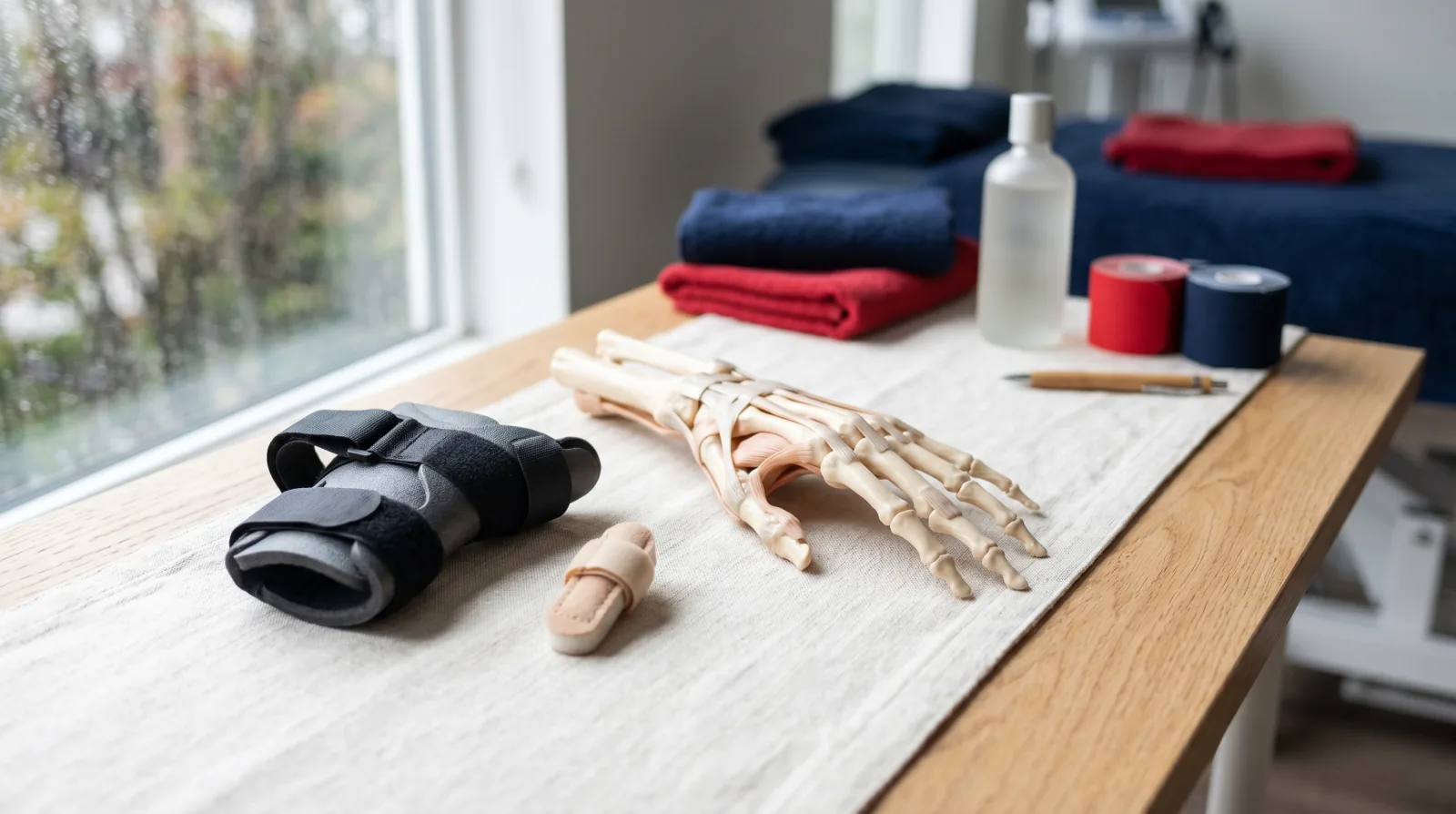
Splinting. A splint that holds the affected finger straight, particularly worn at night, reduces the repetitive catching and gives the irritated tendon a chance to calm down. It works best in milder cases and when combined with activity changes. By stopping the finger from cycling through the painful catch over and over, the splint lets the tissue settle.
Activity modification. Reducing the heavy, repetitive gripping that aggravates the tendon is the other half of the early plan. Just as with other hand tendon problems, removing the load that drove the irritation is essential, because a tendon that keeps getting overloaded cannot settle no matter what else you do.
A hand therapist can also guide gentle tendon-gliding movements and advise on how to modify the gripping tasks that flare it, so the finger keeps moving without constantly re-triggering.
When an injection is the next step
If splinting and activity changes do not settle the symptoms, a corticosteroid injection into the tendon sheath is commonly the next step, and it is often effective, sometimes resolving the problem entirely. It is a reasonable measure to try before surgery.
The decision is made with your physician, who weighs how severe and persistent the triggering is and your overall health, including conditions like diabetes that can affect how injections are managed. Unlike some tendon problems where injections offer only short-term relief, corticosteroid injection has a genuinely useful role in trigger finger specifically, which is why it sits as a standard step between conservative care and surgery.
When surgery is needed
Surgery is considered when the finger is locking severely, when symptoms persist despite splinting and one or more injections, or when the catching significantly affects hand function. The procedure releases the tight tunnel so the tendon can glide freely again, and it is generally effective.
Most cases do not reach this stage. The point of starting with splinting and activity changes, then injection if needed, is that the majority of trigger fingers settle without an operation. Surgery is the answer for the stubborn minority, not the default.
When to get it assessed
If a finger is catching, clicking, or locking, an assessment confirms it is trigger finger, fits you with an appropriate splint, and gives you practical ways to reduce the aggravating gripping. Caught early, it often responds to these simple measures. If you have several fingers triggering, mention it to your physician, as it can relate to your broader health.
Book a 30-minute appointment and we will assess the finger, set up the right splinting and activity plan, and coordinate with your physician if an injection or surgical opinion becomes the right next step.
This article is general information about trigger finger. It is not personal medical advice. Injection and surgical decisions belong with a physician. A regulated practitioner can confirm whether the patterns described apply to you.
Sources
- Fleisch et al. Corticosteroid injections in the treatment of trigger finger: a level I and II systematic review, Journal of the American Academy of Orthopaedic Surgeons (2007)
- Valdes. A retrospective review to determine the long-term efficacy of orthotic devices for trigger finger, Journal of Hand Therapy (2012)
- College of Physical Therapists of BC (CPTBC)
Common questions
Frequently asked questions.
What causes trigger finger?
Trigger finger happens when a flexor tendon in the finger and the tunnel it glides through become irritated and thickened, so the tendon catches as it passes through. This produces the clicking, catching, or locking when you bend and straighten the finger. It is often linked to repetitive gripping, and is more common in people with diabetes and in certain age groups.
Can trigger finger be treated without surgery?+
Often, yes, especially when caught early. A splint that holds the affected finger straight, particularly at night, combined with reducing aggravating gripping activities, helps many cases. If that is not enough, a corticosteroid injection is commonly effective. Surgery is reserved for cases that do not respond to these measures or that are locking severely.
Does a splint work for trigger finger?+
A splint that keeps the finger from bending, often worn at night, can settle early or mild trigger finger by reducing the repetitive catching and giving the irritated tendon a chance to calm down. It works best in milder cases and when combined with activity modification. More stubborn or severe cases may need an injection or surgery, but splinting is a reasonable first step.
When should I get a cortisone injection for trigger finger?+
A corticosteroid injection is commonly considered when splinting and activity changes have not settled the symptoms, and it is often effective, sometimes resolving the problem. It is a reasonable next step before surgery. The decision is made with your physician, weighing how severe and persistent the triggering is and your overall health, including conditions like diabetes.
When does trigger finger need surgery?+
Surgery is considered when the finger is locking severely, when symptoms persist despite splinting and one or more injections, or when the catching significantly affects function. The procedure releases the tight tunnel so the tendon glides freely. Most cases do not reach this stage, but for those that do, surgery is generally effective.
How is trigger finger different from de Quervain's tenosynovitis?+
Both affect a tendon at the base of the hand and wrist, but the location and the catching pattern differ. Trigger finger involves a flexor tendon at the base of a finger catching as it glides through a narrowed tunnel, producing clicking or locking when you bend the finger. De Quervain's tenosynovitis affects tendons on the thumb side of the wrist and causes pain with thumb and wrist movement rather than finger locking. An assessment distinguishes the two.
What happens at a first physiotherapy visit for trigger finger?+
A first visit starts with a history: which finger, how long it has been catching, and what gripping tasks aggravate it. The physiotherapist or hand therapist then examines the finger for the tender bump at the base, checks how it catches or locks, and confirms the stage of the condition. From there they fit an appropriate splint and set out which gripping activities to reduce while the tendon settles.
Can I keep working or using my hand with trigger finger?+
Often, yes, with changes to how you grip. The goal is reducing the heavy, repetitive gripping that aggravates the tendon rather than stopping hand use entirely. A splint worn mainly at night lets you keep using the hand during the day while the tendon settles. Tasks that involve sustained or forceful gripping are the ones most worth modifying first.
Share this post
Copies a ready-to-publish LinkedIn post to your clipboard and opens the LinkedIn share dialog. Paste the text into the composer and publish.

Written by
Ali Shafiei, RPTAli Shafiei is a Registered Physiotherapist with 10+ years of clinical experience in musculoskeletal, neurological and sports rehabilitation. North Vancouver.
This article is for general information only and does not constitute medical advice, diagnosis, or treatment. Individual presentations vary, and assessment findings and treatment plans differ from person to person. If you are experiencing severe symptoms, neurological changes (numbness, weakness, bowel or bladder changes), or a significant trauma, contact your physician or emergency services. Care at Medstar Sport Physio & Health is provided by practitioners registered with their respective British Columbia regulatory colleges.
Filed under
- trigger-finger
- hand
- splinting
- tendon
- north-vancouver