
Tendon & joint
Bursitis & Tendinitis | North Vancouver
The dull, nagging ache that flares the moment you reach overhead, kneel, or push off a sore hip. Most of it calms down once we settle the inflamed tissue and fix the load that lit it up in the first place.
What it is
Understanding your bursitis / tendinitis.
Bursitis and tendinitis are two of the most common reasons a joint starts hurting without an obvious injury. A bursa is a small fluid-filled cushion that lets tendons and muscles glide over bone; when it gets irritated, the joint swells and aches. Tendinitis is the tendon itself (the cord linking muscle to bone) becoming inflamed and tender. They often show up together, most commonly in the shoulder, hip, knee, elbow, or ankle. At Medstar Sport Physio in North Vancouver, we assess and treat this through a one-on-one physiotherapy appointment, confirming the pattern and building a plan from there. We see patients from across Vancouver and the North Shore, many of whom cross Lions Gate Bridge or take the SeaBus for treatment here.
The story is usually one of repetition, not a single dramatic moment. A tendon or bursa that's asked to do the same job over and over (throwing, lifting, kneeling, typing, running hills) without enough recovery starts to grumble. A sudden jump in training, a new job, or a season of one sport tips a tissue that was coping right over the edge.
Underneath that, there's almost always a contributing factor: a weak or imbalanced muscle group, a stiff joint above or below, poor posture, or tightness that increases friction over the bursa. Age plays a part too, tendons and bursae get less resilient over time, so they irritate more easily. That's why calming the pain is only half the work, the part that keeps it gone is finding and changing what overloaded the tissue.
What to expect
An acute, freshly irritated bursa or tendon often quietens noticeably within two to three weeks of settling the load and starting the right exercises. Longstanding tendinitis (the kind that's been there for months) is slower and rewards patience: tendons remodel over six to twelve weeks of consistent loading. We'll be honest about which one you're dealing with, and if the pain isn't behaving the way an irritated tendon should, we'll flag it for your physician rather than pushing on.
Get a plan
Not sure if we're the right fit?
Send us a quick note about what's going on. A physiotherapist will read it personally and reply with what they'd recommend. No commitment to book.
Common questions
About bursitis / tendinitis.
What's the difference between bursitis and tendinitis?
They're neighbours and often travel together. Bursitis is inflammation of the fluid-filled cushion that reduces friction in a joint; tendinitis is irritation of the tendon that attaches muscle to bone. The symptoms overlap (pain, tenderness, stiffness with movement) and the treatment is similar, so the precise label matters less than identifying what overloaded the area.
Should I just rest it until the pain goes away?+
A short rest from the aggravating activity helps an angry tissue settle, but complete rest beyond a few days usually backfires, the tendon de-conditions and gets re-injured the moment you return. The better path is relative rest: back off the trigger, keep the tissue loaded at a level it can handle, and build from there.
Do I need a cortisone injection?+
Sometimes an injection from your physician helps break a severe pain cycle, but it treats the inflammation, not the cause. On its own it tends to give short-term relief and a high recurrence rate. We focus on the loading and mechanics so that if you do have an injection, the relief actually sticks.
Is shockwave therapy worth trying for tendon pain?+
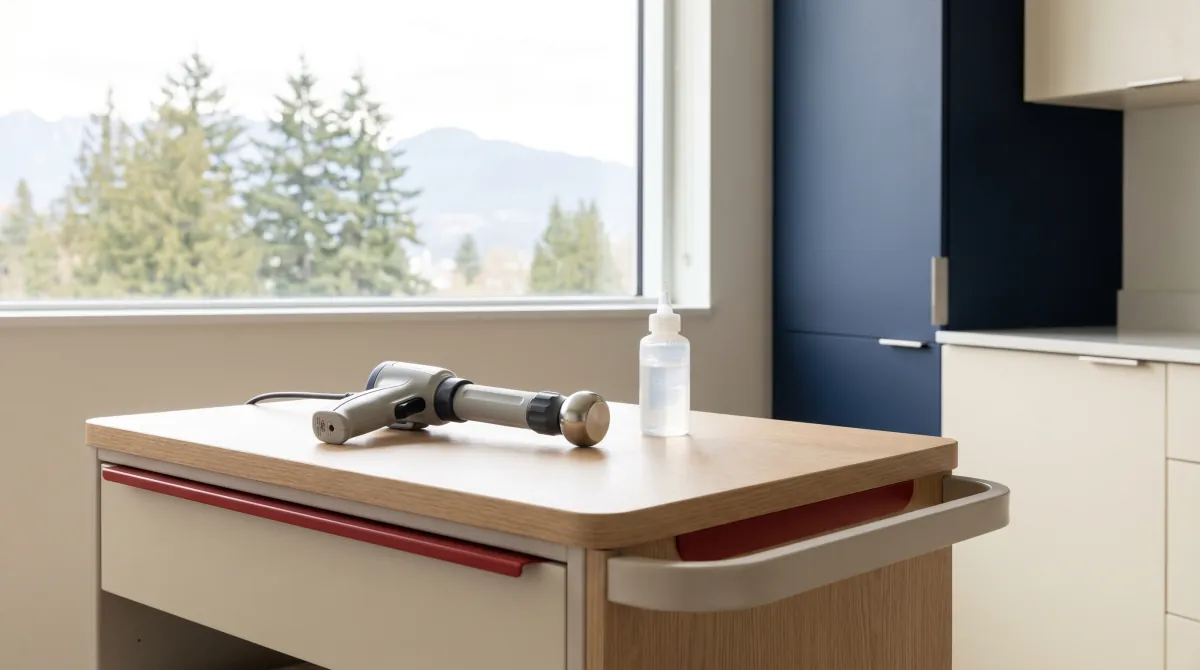
For chronic tendinitis that hasn't responded to several weeks of good rehab, shockwave is a reasonable, well-tolerated adjunct that can stimulate the tendon to heal. It's not a standalone fix, it works best paired with a loading program, and we'll tell you honestly if your case is a good candidate.
Do you treat tricep tendinopathy specifically?+
Yes. Pain at the back of the elbow that flares with pushing, dips, or extending the arm against resistance is usually tricep tendinopathy, the same overload-and-undertrained pattern as other tendinitis, just a less common site. It gets the same progressive loading approach as elbow, shoulder, or knee tendon pain, adjusted for the tricep's specific movement and strength demands.
What actually causes bursitis and tendinitis?+
It's usually repetition, not a single injury. A tendon or bursa asked to do the same job over and over, such as throwing, lifting, kneeling, typing, or running hills, without enough recovery starts to grumble, and a sudden jump in training or a new repetitive task can tip it over the edge. Underlying contributors often include a weak or imbalanced muscle group, a stiff joint nearby, poor posture, or tightness that increases friction over the bursa.
How long does bursitis or tendinitis take to settle?+
A freshly irritated bursa or tendon often quietens noticeably within two to three weeks of settling the load and starting the right exercises. Longstanding tendinitis that's been present for months is slower, since tendons remodel over six to twelve weeks of consistent loading. If the pain isn't behaving the way an irritated tendon should, that gets flagged for your physician rather than pushed through.
What can I expect during treatment for bursitis or tendinitis?+
Treatment starts with a hands-on assessment of the painful joint plus the segments above and below it, since the goal is treating the cause of the friction, not just the sore spot. Early on that means rest, ice, or heat plus manual therapy to restore glide and take pressure off the bursa. As irritability settles, treatment shifts to progressive tendon loading and strengthening, with shockwave or laser added for stubborn, long-running cases.

Reviewed by Amir Ahmadi, PhD, MSc PT, Registered Physiotherapist, Certified IMS Therapist, College of Physical Therapists of British Columbia (CPTBC). Last reviewed July 2026.
This page is for general information only and does not constitute medical advice, diagnosis, or treatment. Individual presentations vary, and assessment findings and treatment plans differ from person to person. If you are experiencing severe symptoms, neurological changes (numbness, weakness, bowel or bladder changes), or a significant trauma, contact your physician or emergency services. Physiotherapy at Medstar Sport Physio & Health is provided by physiotherapists registered with the College of Physical Therapists of British Columbia (CPTBC).