
Headaches
Headaches & Cervicogenic Pain | North Vancouver
Tension at the temples, a band around the head, pain that climbs from the neck into the skull. We treat the headache types that physio can actually move, and we tell you when it's something else.
What it is
Understanding your tension / cervicogenic headache.
Headaches come in flavours, and the flavour matters. Tension-type headaches are the dull, band-around-the-head kind that build through a long day at the screen. Cervicogenic headaches start at the base of the skull or the upper neck and refer pain up into the temples or behind the eye. Migraines are a different problem, vascular and neurological, though the neck often participates as a trigger. Cluster, sinus, and post-concussion headaches each have their own pattern. At Medstar Sport Physio in North Vancouver, we assess and treat this through a one-on-one physiotherapy appointment, confirming the pattern and building a plan from there. We see patients from across Vancouver and the North Shore, many of whom cross Lions Gate Bridge or take the SeaBus for treatment here.
Physio is well-suited to the first two. We can usually help the neck-and-muscle component of migraine, but the migraine itself is a medical management problem. Part of the first assessment is sorting out which headache type is driving your case so the plan matches the diagnosis.
Most tension and cervicogenic headaches we see share a small set of culprits: upper-cervical joint stiffness, an overworked suboccipital and upper trapezius group, a jaw quietly clenching through the workday, and a workstation set up for someone two inches taller. Stress, prolonged sitting, dehydration, plain fatigue, and bright or noisy environments all stack on top and lower the threshold. The headache itself often brings light or noise sensitivity and trouble focusing along with the neck stiffness. Treating the mechanical drivers together, while flagging the lifestyle ones you can change, is what tends to move the pattern.
What to expect
Tension and cervicogenic headaches often start moving within the first 3 to 6 sessions when the right drivers are addressed. Migraine-dominant cases respond more slowly and usually need parallel physician input. Your physiotherapist will set the next milestone after assessment and refer on if findings warrant it.
Get a plan
Not sure if we're the right fit?
Send us a quick note about what's going on. A physiotherapist will read it personally and reply with what they'd recommend. No commitment to book.
Common questions
About tension / cervicogenic headache.
How do I know if my headache is from my neck?
A cervicogenic headache usually has a side preference, is reproducible by pressing on or moving the upper cervical spine, and often arrives with neck stiffness. It typically does not include aura, nausea to migraine severity, or significant light/sound sensitivity. The first assessment screens for these features.
Will manipulation 'crack' my neck?+
Not unless it's clearly indicated, you're comfortable with it, and consent is explicit. Gentler mobilizations achieve a lot of what high-velocity manipulation does, especially in the upper cervical region, where most cervicogenic headache patterns originate. We default to the lowest-force technique that produces the result and explain each step before we do it, so you always know what to expect during treatment.
I get migraines. Can you help?+
We can help with the neck and muscle contributors that often co-exist with migraine and act as triggers, since migraine is a vascular and neurological problem where the neck still participates. We don't replace medical migraine management. Part of the first assessment is sorting out which headache type is driving your case, and if you're not already working with a physician on migraine, we'll suggest that pathway and run in parallel.
When should a headache get checked by a physician same-day?+
A sudden, severe 'worst-ever' headache, headache with fever, stiff neck, vision changes, weakness, confusion, or one that wakes you from sleep are all physician or 911 calls, not physio bookings. These patterns fall well outside the tension and cervicogenic headaches physio treats, which build gradually and stay tied to neck movement or a screen-heavy day, so treat any of the warning signs above as urgent rather than waiting to see if physio helps first.
Do you direct-bill extended health?+
Yes. Direct billing for most major extended-health insurers, plus ICBC and WorkSafeBC. ICBC matters here because post-concussion headaches are one of the patterns we see after a motor vehicle crash, so a crash-related headache is usually a claim we can bill directly rather than something you pay for and submit yourself. Bring your policy or claim details to the first visit and we'll confirm coverage before you're billed.
Could my jaw be part of why I get headaches?+
It can be. Jaw clenching, often related to TMJ tension, is one of the common culprits behind tension and cervicogenic headaches, alongside upper-cervical joint stiffness and an overworked neck and shoulder group. When clenching is part of the picture we treat the jaw directly, usually paired with cervical treatment for the neck.
What else besides my neck could be triggering headaches?+
Stress, prolonged sitting, dehydration, plain fatigue, and bright or noisy environments all stack on top of neck and jaw tension and lower the threshold for a headache to start. Treating the mechanical drivers in the neck while flagging the lifestyle factors you can change is what tends to move the pattern for tension and cervicogenic headaches.
How do you know if my headache treatment is actually working?+
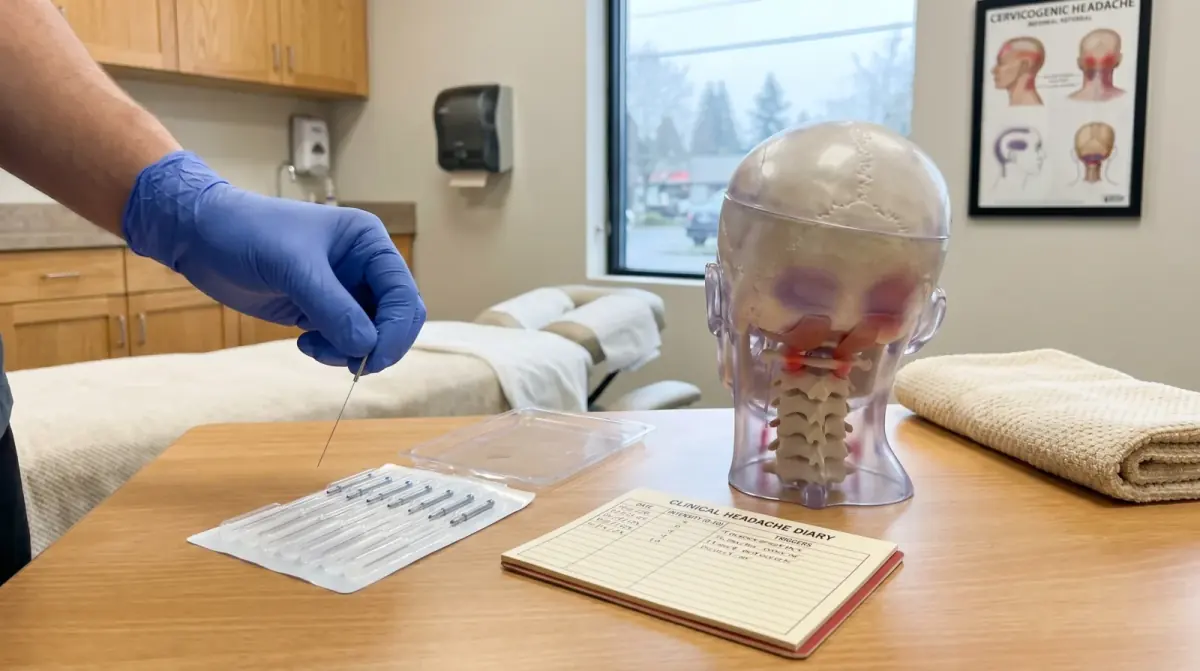
We use headache-diary tracking so you can see whether the pattern is genuinely shifting week to week rather than just having a good few days. For tension and cervicogenic headaches, most people notice movement within the first three to six sessions once the right drivers are being addressed.

Reviewed by Amir Ahmadi, PhD, MSc PT, Registered Physiotherapist, Certified IMS Therapist, College of Physical Therapists of British Columbia (CPTBC). Last reviewed July 2026.
This page is for general information only and does not constitute medical advice, diagnosis, or treatment. Individual presentations vary, and assessment findings and treatment plans differ from person to person. If you are experiencing severe symptoms, neurological changes (numbness, weakness, bowel or bladder changes), or a significant trauma, contact your physician or emergency services. Physiotherapy at Medstar Sport Physio & Health is provided by physiotherapists registered with the College of Physical Therapists of British Columbia (CPTBC).