
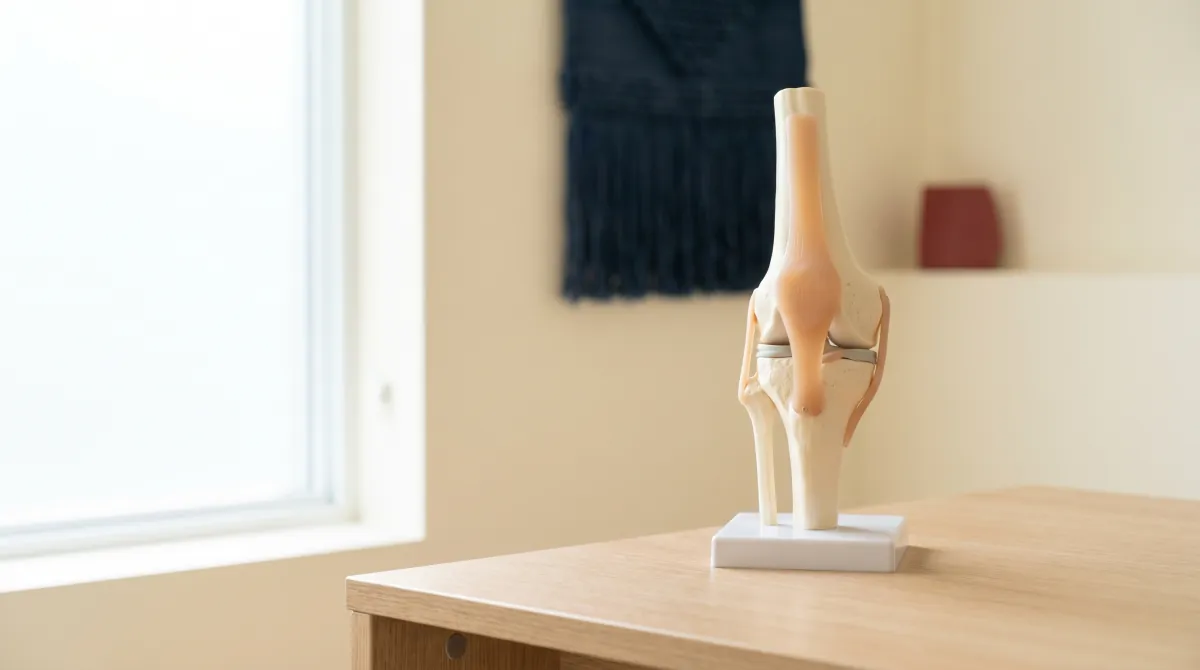
Knee cartilage
Meniscus Tears & Knee Cartilage Injuries | North Vancouver
The knee twisted on a bad landing or a ski edge, and now it clicks, catches, or locks up halfway through a bend. We figure out whether the tear needs the surgeon or just the right rehab, and most don't need the surgeon.
What it is
Understanding your meniscus tear / knee cartilage injury.
The meniscus is a pair of C-shaped cartilage pads that sit between your thigh bone and shin bone. They are shock absorbers that spread the body's weight evenly across the joint and keep it tracking smoothly. Tear one and the knee tells you in a specific way: pain along the joint line, stiffness and a reduced range of motion, swelling that often creeps in over hours or even days rather than instantly, and that unmistakable clicking, catching, or locking when you bend or pivot. The joint can also feel unstable through a twist or a pivot. At Medstar Sport Physio in North Vancouver, we assess and treat this through a one-on-one physiotherapy appointment, confirming the pattern and building a plan from there. We see patients from across Vancouver and the North Shore, many of whom cross Lions Gate Bridge or take the SeaBus for treatment here.
There are really two stories here. The traumatic tear happens in a moment: the knee is bent and weight-bearing, then it twists, rotates, or pivots, often during ski season, court sport, or a missed step on a trail; a direct blow to the knee can do it too. The degenerative tear is the slow version: cartilage that's thinned with age frays under ordinary load, sometimes with no single injury you can name, which is why tears turn up more often in older adults. Weak muscles around the knee or hip, poor movement patterns, a previous knee injury, or a steady diet of repetitive stress all stack the odds, and everyday loads like squatting, lifting, or running on uneven ground can aggravate a tear or stall its healing. The two stories behave differently and need different plans, which is the first thing we sort out.
This is the page for the cartilage. If the giving-way is coming from a ligament (an ACL or MCL after a crash or a hard fall), that's a different structure and a different rehab arc; we cover it on the knee injury page. A meniscus assessment is about reading the catch, the joint-line tenderness, and the twisting pattern to know which tissue is actually the problem.
What to expect
Degenerative tears and stable traumatic tears often respond well to loading, and many people are back to full activity in 6 to 12 weeks without surgery. A knee that's truly locked, or one that keeps giving way despite good rehab, is the case that warrants a surgical opinion. Repaired menisci are a longer project: several months of staged loading, but with a clear milestone at every step.

Book a sports assessment with Ali Shafiei
Ali leads sport and orthopaedic physiotherapy at the clinic: manual therapy, IMS dry needling, and exercise-based rehab built around getting you back to your sport, with pain relief along the way. He is taking new patients with same-week availability.
Get a plan
Not sure if we're the right fit?
Send us a quick note about what's going on. A physiotherapist will read it personally and reply with what they'd recommend. No commitment to book.
Common questions
About meniscus tear / knee cartilage injury.
Do I need surgery for a meniscus tear?
Often not. A large share of meniscus tears, especially degenerative ones and stable traumatic tears, settle with loaded rehab, and the research on degenerative tears in particular shows physiotherapy matching surgery for many people. The clearer surgical cases are a knee that locks and won't fully straighten, or one that keeps catching and giving way despite a fair trial of rehab.
What's the difference between this and an ACL injury?+
The meniscus is cartilage; the ACL is a ligament. Meniscus tears tend to give joint-line pain, catching, and locking after a twist. ACL ruptures usually announce themselves with a pop, fast swelling, and a knee that feels unstable. They can happen together in the same incident, so part of the assessment is sorting which structures are involved. If it's the ligament, our knee injury and ACL recovery page is the better fit.
Can I keep skiing or running on it?+
Depends on how the knee is behaving. A stable knee that doesn't lock can usually keep moving at a managed dose while we build it back up, and that's better than total rest, which lets the quad waste. A knee that catches, swells hard, or buckles needs assessing before you load it on Grouse or Seymour.
My MRI says I have a meniscus tear but the pain isn't that bad. What does that mean?+
Meniscus changes show up on plenty of pain-free knees, particularly past 40, so a tear on imaging isn't automatically the source of your symptoms. We treat the knee in front of us and match the scan against what we find. If the way it moves and the way it loads match the MRI finding, we factor it in; if they don't, we look elsewhere.
I tore it on the ski hill: is it covered by ICBC?+
ICBC covers injuries from motor-vehicle crashes, not ski falls. A ski-season meniscus tear would typically run through your extended-health plan, and we direct-bill most major insurers. If your knee injury did come from a crash, bring your claim number and we'll handle the ICBC billing.
Where can I get meniscal injury treatment in Vancouver or the North Shore?+
Medstar Sport Physio at 1325 Marine Drive in North Vancouver treats meniscus tears, degenerative cartilage injuries, and post-surgical knee rehab. We direct-bill most extended-health plans. Patients come from across North Vancouver, West Vancouver, and downtown via the SeaBus. Book online or call us to describe the injury first if you want a sense of whether physio is the right starting point.
How do you tell if it's actually a meniscus tear?+
We use joint-line and twist testing to confirm the meniscus is involved. This also flags the specific case that needs an urgent surgical opinion rather than rehab: a knee that is genuinely locked and won't fully straighten. A meniscus assessment is about reading the catch, the joint-line tenderness, and the twisting pattern to know which tissue is the real problem.
What happens if rehab for my meniscus tear isn't working?+
We give you an honest read on when conservative care has plateaued and an orthopaedic referral is the smarter next step. Most degenerative tears and stable traumatic tears respond well to loading, but a knee that's truly locked, or one that keeps giving way despite good rehab, is the case that warrants a surgical opinion rather than more time on the same plan.

Reviewed by Amir Ahmadi, PhD, MSc PT, Registered Physiotherapist, Certified IMS Therapist, College of Physical Therapists of British Columbia (CPTBC). Last reviewed July 2026.
This page is for general information only and does not constitute medical advice, diagnosis, or treatment. Individual presentations vary, and assessment findings and treatment plans differ from person to person. If you are experiencing severe symptoms, neurological changes (numbness, weakness, bowel or bladder changes), or a significant trauma, contact your physician or emergency services. Physiotherapy at Medstar Sport Physio & Health is provided by physiotherapists registered with the College of Physical Therapists of British Columbia (CPTBC).