Cycling Knee Pain: When It's the Bike Fit and When It's You
Cycling knee pain has a location language. Where it hurts often points to what's wrong, and the fix is usually a mix of the bike fit and your own capacity.
BY AMIR AHMADI, PHD
Cyclists are unusually precise about their pain. Ask a runner where their knee hurts and you get a vague wave. Ask a cyclist and you get a specific spot. That precision is genuinely useful, because in cycling knee pain, where it hurts often points to what is going wrong. The fix is usually a combination of the bike and the rider.
Cycling knee pain is most often caused by a combination of bike-fit errors and training load issues, and the fix usually involves addressing both rather than one alone. Where the pain sits tends to point toward the likely cause: front-of-knee pain often relates to saddle height or position, while inner or outer pain may reflect cleat alignment. But adjusting the bike without addressing a strength gap or a spike in riding volume often gives only partial relief. At Medstar Sport Physio in North Vancouver, we assess both your position on the bike and the rider's own capacity, including hip and quadriceps strength. What the right plan looks like depends on the pain location, your training history, and how quickly the volume increased.
Why cycling is hard on knees in a specific way
Cycling is low-impact, which makes it kind to joints in many respects. But it is also enormously repetitive. A typical ride involves tens of thousands of near-identical pedal strokes, so even a small problem in how the knee loads gets multiplied over and over. That repetition is why subtle issues in the bike fit or in the rider's strength show up as knee pain, even though no single pedal stroke is stressful.
The location language of cycling knee pain
Where the pain sits tends to point toward the contributing factors.
Front of the knee. Pain around the kneecap is the most common cycling knee complaint. It relates to how the kneecap loads against the thigh bone, and a saddle that is too low or set too far forward keeps the knee more bent through the pedal stroke, increasing that load. A spike in riding volume or hard climbing can also drive it. This shares mechanics with the broader pattern of runner's knee, where kneecap loading is also central.
Back of the knee. Pain behind the knee often points to a saddle that is too high, which overextends the knee at the bottom of the stroke and stresses the hamstrings and the back of the joint.
Inner or outer knee. Pain on the sides frequently relates to cleat alignment, which changes how the knee tracks through the stroke. A cleat rotated or positioned poorly can pull the knee into a path it does not like.
These are tendencies, not rules, which is why an assessment matters rather than self-diagnosing from a diagram.
What a bike fit can and cannot do
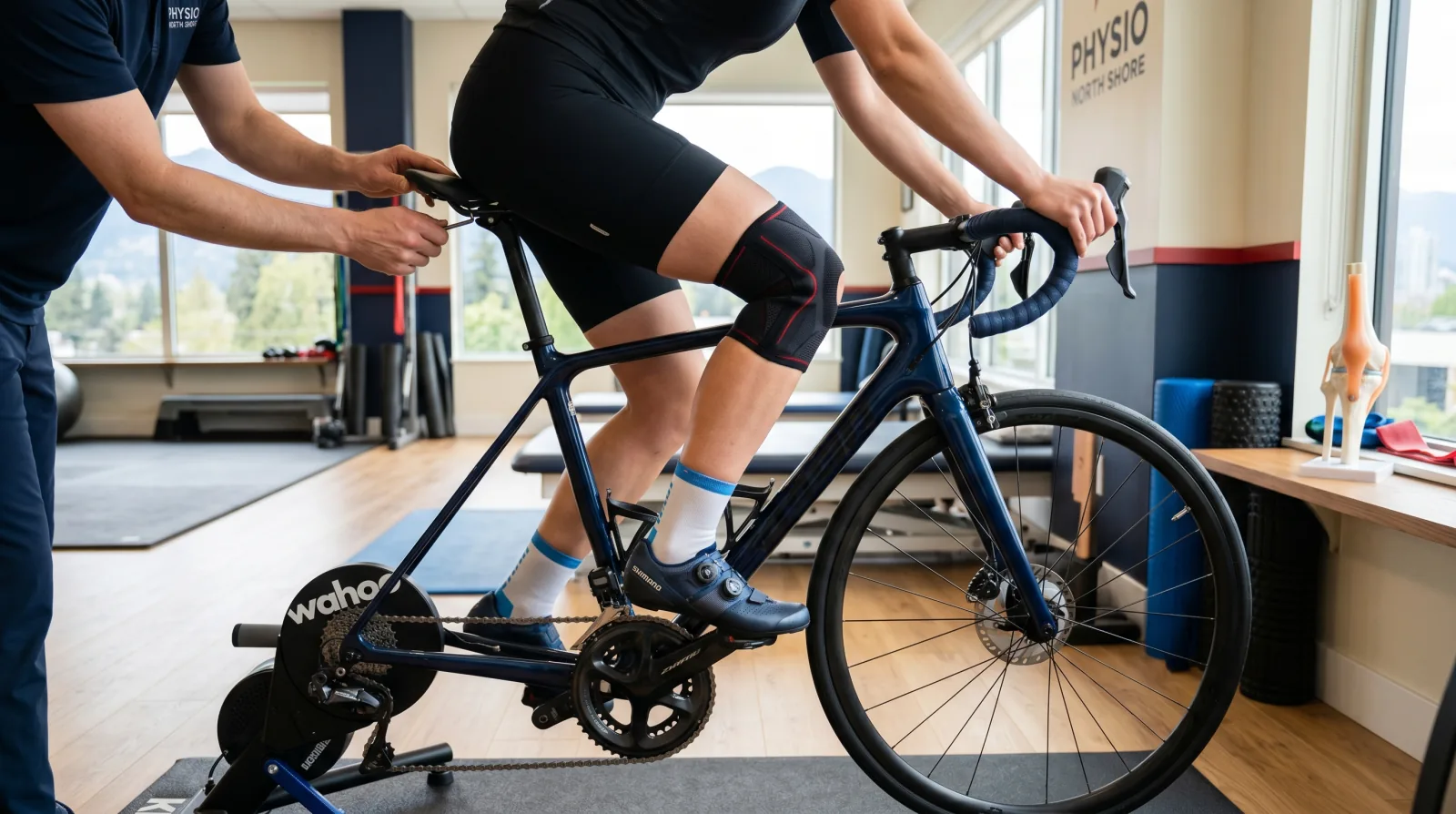
A bike fit can do a great deal. Saddle height, fore-aft position, and cleat alignment all change how the knee loads, and because those loads repeat thousands of times per ride, small adjustments can produce real relief. For many riders, dialling in the fit is a big part of solving the problem.
But a bike fit is rarely the whole answer, and treating it as a magic fix is a common mistake. If the knee pain came from a training spike, a sudden jump in volume or in the steep North Shore climbing, or from a strength gap, adjusting the bike without addressing the load or the rider's capacity gives only partial relief. The pain comes back because the underlying driver was never the bike.
When it is you, not the bike
The rider's side of the equation has two main parts.
Training load. Like every overuse problem, cycling knee pain often traces back to load climbing faster than the tissue could adapt. A big increase in weekly hours, a jump into climbing-heavy rides, or a return to riding after a layoff can all overload the knee. The same load-management thinking we apply to shin splints applies here: reduce to a tolerable level, then build back gradually.
Strength and capacity. A knee that is not strong enough for the demands you place on it will complain. Quadriceps and hip strength, in particular, influence how the knee tolerates the repetitive load of cycling. Rebuilding that capacity often does what a bike fit alone cannot.
Should you stop riding?
Usually not entirely. For most cycling knee pain, we reduce volume and intensity to a level that does not provoke significant symptoms, address the bike fit and any strength gaps, and build back gradually. Complete rest tends to leave you deconditioned without fixing the cause, so the pain returns when you ride again unless the fit and capacity are sorted. Keeping you riding in a modified form, while we change the things that actually drive the pain, is both more effective and more enjoyable than parking the bike.
A note for older riders
Most cycling knee pain in younger riders is an overuse or loading issue, not joint damage, and it is not a sign of arthritis. In older riders who already have knee osteoarthritis, the picture is different and generally more encouraging: cycling is often a well-tolerated, low-impact option that keeps the joint moving, and we manage it accordingly, in line with our approach to knee osteoarthritis and exercise. An assessment clarifies which situation applies to you.
When to get it assessed
If your knee hurts when you ride, an assessment sorts out how much is the bike and how much is the load and your capacity, then gives you a plan that addresses both. Trying to fix it with a new saddle position alone, or with rest alone, usually disappoints because cycling knee pain rarely has a single cause.
Book a 30-minute appointment and we will assess your knee, look at how you load it on the bike, review your riding load, and build a plan that gets you back to comfortable kilometres on the North Shore.
This article is general information about cycling-related knee pain. It is not personal medical advice. A regulated practitioner can confirm whether the patterns described apply to you.
Sources
- Bini et al., Effects of saddle position on pedalling technique and methods to assess pedalling kinetics and kinematics, Sports Biomechanics (2011)
- Wanich et al., Cycling injuries of the lower extremity, Journal of the American Academy of Orthopaedic Surgeons (2007)
- College of Physical Therapists of BC (CPTBC)
Common questions
Frequently asked questions.
Why does the front of my knee hurt when I cycle?
Pain at the front of the knee in cyclists often relates to how the kneecap loads against the thigh bone, and a saddle that is too low or set too far forward can increase that load by keeping the knee more bent through the pedal stroke. It can also reflect a rapid increase in riding volume or intensity. We look at both the bike fit and the training load.
Can a bike fit fix knee pain?+
Often it helps significantly, because saddle height, fore-aft position, and cleat alignment all change how the knee loads. But a bike fit is rarely the whole answer. If the knee pain came from a spike in riding or from a strength gap, adjusting the bike without addressing the load or capacity tends to give partial relief. The two work together.
What saddle height is right for my knees?+
There is no single number, but a saddle that is too low keeps the knee overly bent and can load the front of the knee, while one that is too high overextends the knee and can stress the back of it and the hamstrings. A proper fit sets saddle height to your body and riding style. We assess your position rather than applying a generic rule.
Should I stop cycling if my knee hurts?+
Usually you can keep riding in a modified form. We reduce volume and intensity to a tolerable level, address the bike fit and any strength gaps, and build back gradually. Complete rest tends to leave you deconditioned and does not fix the underlying cause, so the pain often returns when you ride again unless the fit and capacity are sorted.
Is cycling knee pain a sign of arthritis?+
Not usually in younger riders. Most cycling knee pain is an overuse or loading issue related to the bike fit, training load, and strength, rather than joint damage. In older riders with existing knee osteoarthritis, cycling is often a well-tolerated, low-impact option, and pain there is managed differently. An assessment clarifies which situation applies to you.
What happens at a first physiotherapy visit for cycling knee pain?+
The physiotherapist takes a history of your riding, including recent volume, climbing, and any recent equipment changes, then examines the knee, hip, and quadriceps strength. Where useful, we ask about your bike setup: saddle height, fore-aft position, and cleat alignment. From there we agree on a plan that may combine load changes, strength work, and bike-fit adjustments, rather than assuming a single cause.
Should I see a physiotherapist or get a bike fit first for knee pain?+
Either is a reasonable starting point, but a physiotherapy assessment is useful when the pain has been building over weeks or is not clearly tied to one recent bike change. We look at the bike position and the rider's strength and load together, so you are not left guessing whether the saddle or your training caused the pain. A bike fitter and a physiotherapist can also work from the same findings.
Are the North Shore's steep climbs a factor in cycling knee pain?+
Climbing adds load to the knee with every pedal stroke, and a sudden jump into climbing-heavy rides is a common trigger for cycling knee pain, alongside a spike in weekly volume. Riders training on steep local terrain often notice knee pain appearing soon after they add more hill work than their knee and quadriceps strength were ready for. Building climbing volume gradually reduces this risk.
Share this post
Copies a ready-to-publish LinkedIn post to your clipboard and opens the LinkedIn share dialog. Paste the text into the composer and publish.
Written by
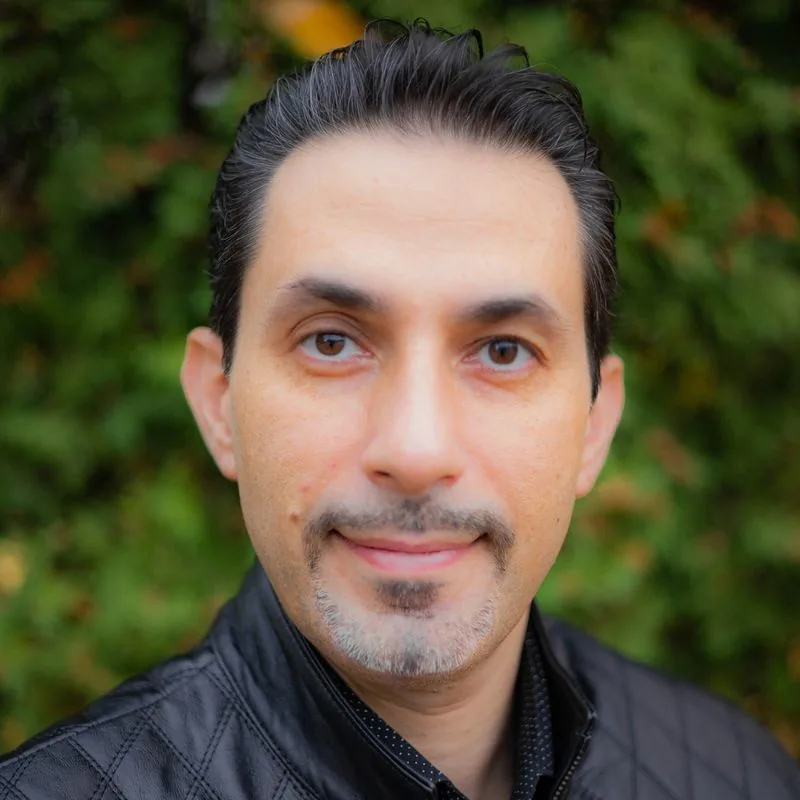
Amir Ahmadi, PhDDr. Amir Ahmadi is a Registered Physiotherapist, Certified IMS Therapist and former Associate Professor. 20+ years of clinical practice in North Vancouver.
This article is for general information only and does not constitute medical advice, diagnosis, or treatment. Individual presentations vary, and assessment findings and treatment plans differ from person to person. If you are experiencing severe symptoms, neurological changes (numbness, weakness, bowel or bladder changes), or a significant trauma, contact your physician or emergency services. Care at Medstar Sport Physio & Health is provided by practitioners registered with their respective British Columbia regulatory colleges.
Filed under
- cycling
- knee-pain
- bike-fit
- overuse
- north-vancouver