Vestibular Rehab for BPPV: When the Epley Maneuver Solves It in a Single Visit
BPPV is the most common cause of vertigo. It is also the most treatable. A correctly performed positional maneuver resolves it in a single visit for most patients, but only after the involved canal is identified.
BY SANAZ DAVARIAN, PHD
BPPV is the most common and most treatable cause of vertigo. A canal-repositioning maneuver, such as the Epley, can resolve symptoms in a single visit for most patients. The key step that often gets skipped at home is identifying which ear and which canal is involved first. The maneuver only works on the correct side. At Medstar Sport Physio in North Vancouver, our vestibular physiotherapists perform both the diagnostic test and the repositioning maneuver in one appointment. Roughly two-thirds of cases settle after a single correctly performed maneuver. Stubborn cases may take two or three sessions. What determines the approach is which canal is involved and whether the nystagmus pattern points to a posterior or horizontal variant.
If you have brief, intense spinning episodes triggered by rolling over in bed, looking up to a high shelf, or sitting up too fast, that is the pattern this article describes.
What BPPV actually is
The inner ear has three semicircular canals that detect head rotation, filled with fluid and lined with hair cells that read the motion. Normally, small calcium carbonate crystals called otoconia sit in a separate area (the utricle) and are not free in the canals. In BPPV, some of these crystals dislodge and migrate into one of the canals, most commonly the posterior canal of one ear. When the head moves in a specific plane, the loose crystals move within the canal, deflect the hair cells, and the brain receives a brief but powerful signal that the head is spinning.
The result is a short, intense vertigo episode tied to a specific head position: rolling onto one side, tipping the head back to wash hair, getting out of bed. The episode typically lasts under a minute and stops when the head stays still. Between episodes the patient feels normal or mildly off-balance, not continuously spinning.
The American Academy of Otolaryngology BPPV Clinical Practice Guideline is the canonical reference for diagnosis and management.
Diagnostic logic: which canal, which ear
Treatment depends on identifying the involved canal and the involved ear. The two main tests:
- Dix-Hallpike test. Identifies posterior-canal BPPV (the most common variant, about 85 to 95% of BPPV cases). The patient is moved from sitting to a head-back, head-rotated position; a positive test produces a brief vertigo and a specific eye-movement pattern (torsional, upbeating nystagmus toward the lower ear).
- Supine roll test. Identifies horizontal-canal BPPV (less common, but real, about 5 to 15% of cases). The patient lies supine with the head flexed; the head is rolled to one side then the other. The eye-movement pattern is different (geotropic or apogeotropic horizontal nystagmus depending on the variant).
The wrong test on the wrong canal misses the diagnosis. The right test confirms both the canal and the side, which then determines the treatment maneuver. This is the step that home-based protocols typically skip.
The Epley maneuver and its horizontal cousins
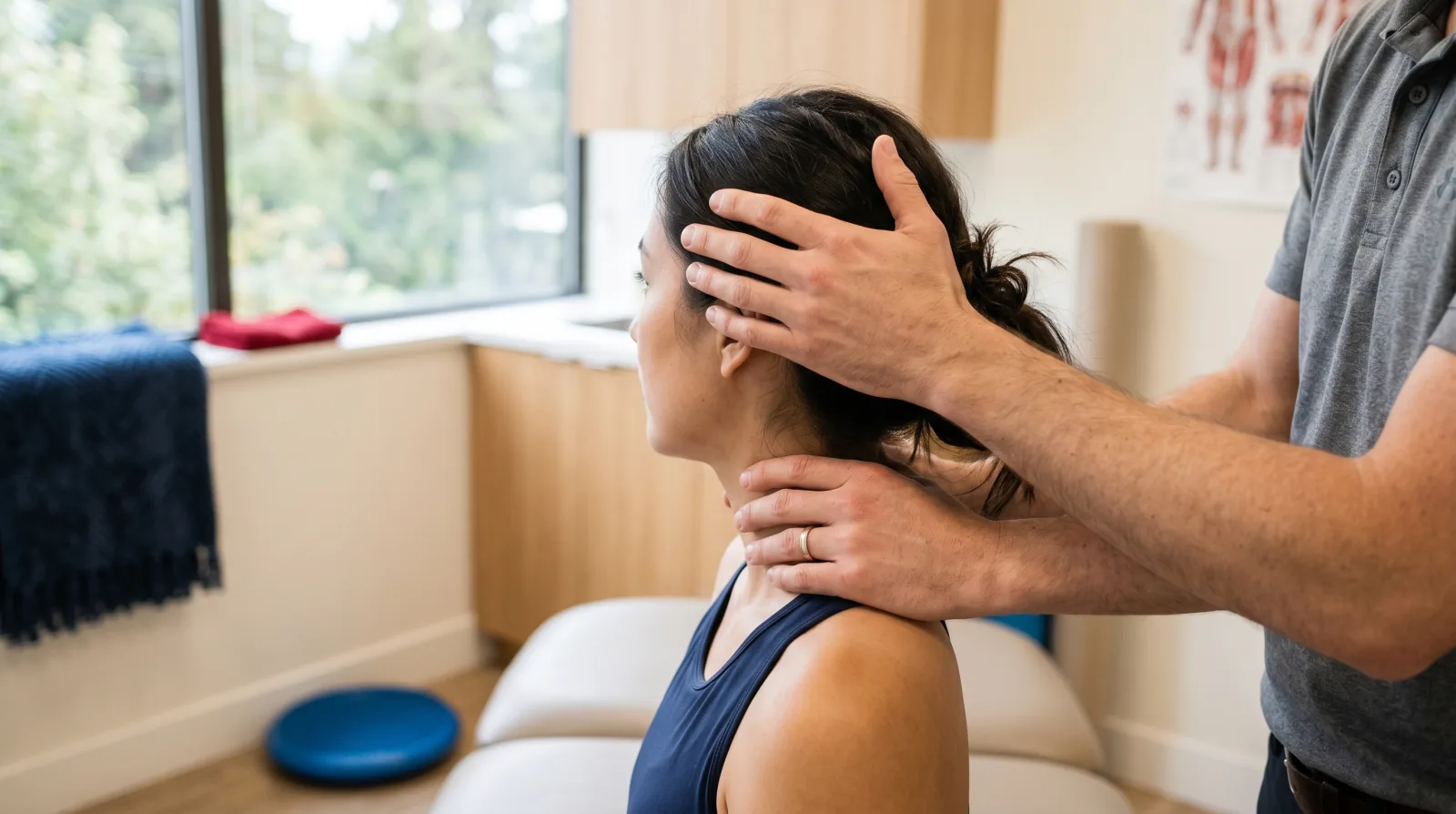
For posterior-canal BPPV, the canalith repositioning procedure (commonly called the Epley maneuver) is the first-line treatment. It is a sequence of four head and body position changes that uses gravity to roll the loose crystals out of the involved canal and back into the utricle, where they do not provoke vertigo.
For horizontal-canal BPPV, different maneuvers (the Lempert roll, the Gufoni maneuver) are used. These are not interchangeable with the Epley. A posterior-canal protocol used on a horizontal-canal presentation can move the problem from one canal to another.
The Cochrane review on the Epley maneuver for posterior-canal BPPV found a clear, consistent benefit. A single maneuver resolves symptoms for the majority of patients, with most studies reporting resolution rates between 60 and 80% after one session.
What a first vestibular visit looks like at Medstar
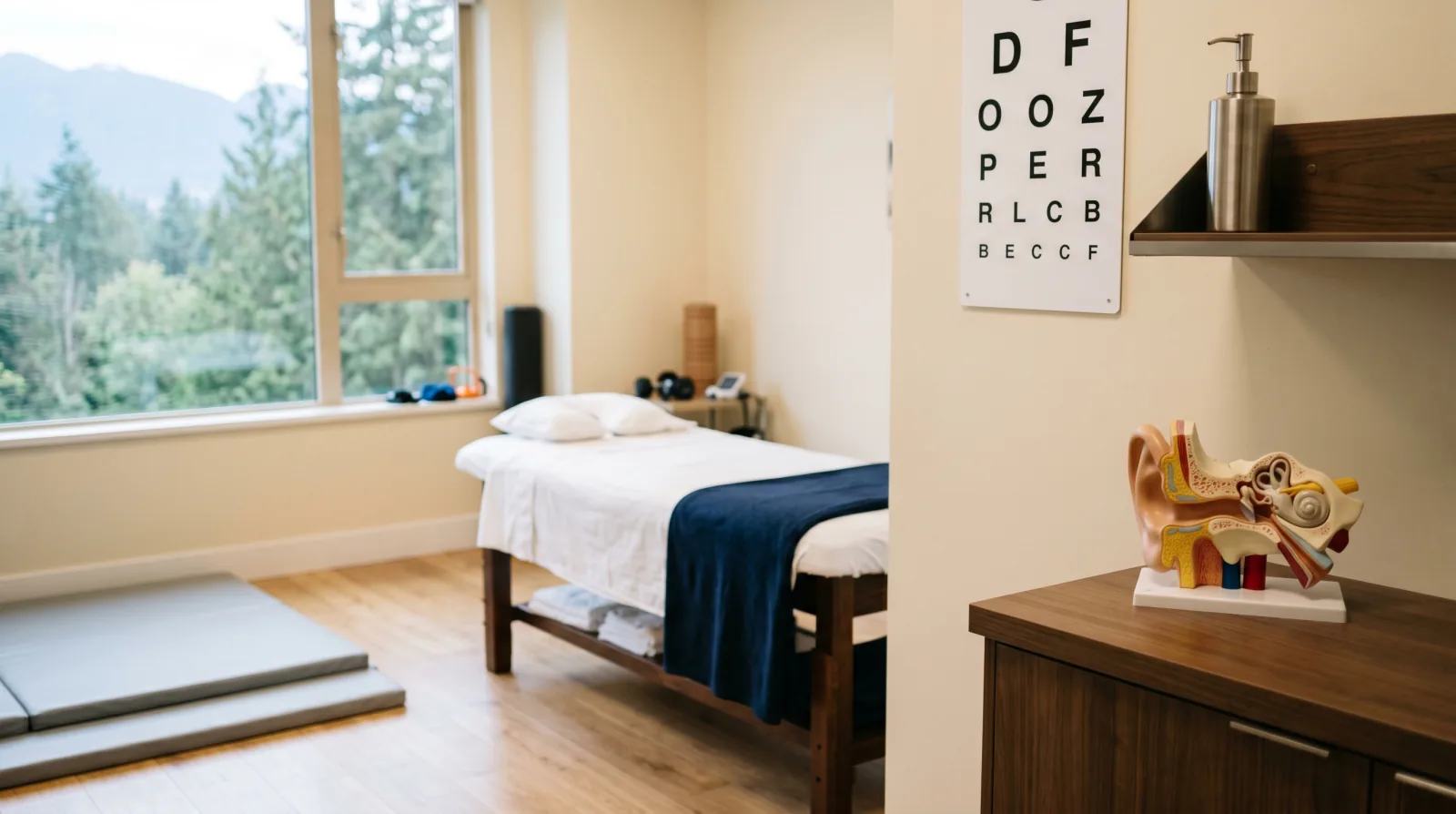
A 45-minute initial assessment with a physiotherapist who has post-licensure vestibular training covers:
- A symptom history: onset, triggers, episode duration, associated symptoms (hearing changes, headache, visual disturbance, gait change).
- A screening neurological exam (cranial nerves, smooth pursuit, saccades, head-impulse testing, gait observation) to rule out central causes that mimic BPPV.
- Positional testing: Dix-Hallpike both sides, supine roll if posterior canal is negative.
- The canal-repositioning maneuver appropriate to the diagnostic finding.
- Post-treatment instructions: how to sleep for the first 24 hours, when to retest, what to do if symptoms persist.
- A second-visit plan, usually one week later to confirm resolution or repeat the maneuver if symptoms persist.
The pattern in our clinic mirrors the published evidence. Most patients are symptom-free after a single visit, a smaller group needs a second session, and a small minority does not respond to maneuvers and gets referred back to the family physician for ear-nose-throat workup.
Conditions that look like BPPV and when to escalate
BPPV is a benign, peripheral vestibular problem. The screening exam is partly there to confirm that and partly there to rule out the causes of vertigo that need medical workup, not physiotherapy:
- Vestibular neuritis or labyrinthitis. Continuous spinning lasting days, not triggered by position.
- Meniere's disease. Episodic vertigo with hearing changes, ear fullness, and tinnitus.
- Vestibular migraine. Vertigo with headache or visual symptoms, often without a positional trigger.
- Central vertigo. Vertigo from a brainstem or cerebellar cause, often with other neurological signs (vision changes, weakness, numbness, severe headache). Central causes warrant emergency assessment, not a clinic appointment.
- Concussion-related dizziness. Common after a head impact, requires its own vestibular and oculomotor rehab pathway. Our post on concussion return-to-play covers the broader return-to-activity framework.
If the screening exam finds any of these features, the visit becomes a triage conversation instead of a maneuver, and we coordinate with the family physician or Lions Gate Hospital as appropriate.
Why some BPPV cases recur
A subset of patients have recurrent BPPV, where the otoconia re-displace into the same canal months or years later. Risk factors include older age, prior head injury, prior BPPV episodes, and vitamin D insufficiency in some studies. Recurrence is not a treatment failure; it is the underlying biology of the inner ear. Our clinic plan for recurrent cases includes teaching the patient a self-administered maintenance maneuver (the modified Epley, performed at home at the first sign of recurrence) and a check-in if the home maneuver does not resolve it.
For first-presentation BPPV, the path is short: one diagnostic step, one treatment maneuver, one week of follow-up. The strongest outcomes happen when the patient comes in early rather than waiting weeks hoping for spontaneous resolution.
This article is general education about benign paroxysmal positional vertigo and vestibular rehabilitation. It is not personal medical advice. A regulated practitioner can confirm whether the patterns described apply to you, screen for non-BPPV causes of vertigo, and apply the correct maneuver.
Sources
- Bhattacharyya et al. Clinical Practice Guideline: Benign Paroxysmal Positional Vertigo (Update), Otolaryngology Head and Neck Surgery
- Hilton and Pinder. The Epley canalith repositioning manoeuvre for benign paroxysmal positional vertigo, Cochrane Database of Systematic Reviews
- Strupp et al. Pharmacotherapy of vestibular disorders and nystagmus, Seminars in Neurology
- College of Physical Therapists of BC (CPTBC)
Common questions
Frequently asked questions.
How do I know if my dizziness is BPPV or something else?
Three features point to BPPV: the spin is triggered by head movement (not at rest), each episode lasts under a minute, and the symptom is positional rather than continuous. Continuous dizziness, dizziness lasting hours, hearing changes, or neurological symptoms (vision changes, numbness, weakness, severe headache) point away from BPPV and need medical assessment. A physiotherapist with vestibular training can confirm BPPV with the Dix-Hallpike or supine roll test in clinic.
Can I just do the Epley maneuver at home from a YouTube video?+
Sometimes, but the maneuver only works on the involved canal of the involved ear. Performed on the wrong side, it can move the otoconia into a different canal and worsen the presentation. The diagnostic step (which ear, which canal) is the part that gets skipped at home. A 30-minute clinic visit confirms the side and applies the correct maneuver. Home-based maintenance maneuvers can be useful after the in-clinic diagnosis.
How many sessions does BPPV treatment usually take?+
Roughly two-thirds of cases resolve with a single correctly performed maneuver. Stubborn cases take 2 to 3 sessions, with repeat maneuvers or a switch from a posterior-canal protocol to a horizontal-canal protocol as the picture clarifies. Cases that do not respond within three sessions warrant medical follow-up, because the cause may be something other than BPPV.
Is vestibular physiotherapy covered by extended health insurance?+
Vestibular rehabilitation by a registered physiotherapist is delivered under the standard physiotherapy benefit on most extended health plans, and there is no separate vestibular category. ICBC and WorkSafeBC cover it within the standard physiotherapy treatment plan when vertigo is linked to a covered injury (concussion after a crash, for example). Check the current benefit on your specific plan.
Should I see a doctor before booking vestibular physiotherapy?+
If your symptoms are purely positional (triggered by head movement, last under a minute, no other neurological symptoms), you can book vestibular physiotherapy directly. If symptoms are continuous, include hearing changes, severe headache, vision changes, or focal neurological signs, see your family physician or attend Lions Gate Hospital emergency first. Those features can signal other vestibular or central causes that need medical workup.
Is it safe to drive with BPPV?+
This is a question for the assessing clinician rather than a blanket rule, because a sudden spinning episode while driving is a real safety risk. Many people with BPPV avoid driving until the involved canal is identified and treated, since a correctly performed maneuver often resolves symptoms in a single visit. Falls risk matters too, particularly for older adults, so mention any near-falls or balance loss at assessment.
What happens if the Epley maneuver does not work the first time?+
It is common for the maneuver to need a repeat attempt or a switch in approach. If a posterior-canal protocol does not resolve symptoms, the physiotherapist reassesses which canal is involved, since the otoconia can shift into a different canal, and applies the matching maneuver, such as the Lempert roll or Gufoni maneuver for a horizontal-canal presentation. Cases that do not respond within a few sessions warrant medical follow-up.
Why does BPPV keep coming back for some people?+
Recurrent BPPV happens when the otoconia (small calcium crystals in the inner ear) re-displace into a canal months or years after a prior episode. It is not a sign that the earlier treatment failed. Older age, a prior head injury, and previous BPPV episodes make recurrence more likely. Patients with recurrent BPPV are often taught a self-administered maintenance maneuver to use at the first sign of symptoms returning.
Share this post
Copies a ready-to-publish LinkedIn post to your clipboard and opens the LinkedIn share dialog. Paste the text into the composer and publish.

Written by
Sanaz Davarian, PhDDr. Sanaz Davarian is a Registered Physiotherapist with a PhD and 20+ years of experience. Certified IMS Therapist, former Assistant Professor of Physiotherapy. North Vancouver.
This article is for general information only and does not constitute medical advice, diagnosis, or treatment. Individual presentations vary, and assessment findings and treatment plans differ from person to person. If you are experiencing severe symptoms, neurological changes (numbness, weakness, bowel or bladder changes), or a significant trauma, contact your physician or emergency services. Care at Medstar Sport Physio & Health is provided by practitioners registered with their respective British Columbia regulatory colleges.
Filed under
- vestibular-rehab
- bppv
- vertigo
- epley-maneuver
- north-vancouver