
Bone Stress Injuries in Runners: Catching a Stress Fracture Before It Stops You
A bone stress injury is the running injury you cannot push through. Catching it early, by its specific warning signs, is the difference between weeks off and months.
BY AMIR AHMADI, PHD
Most running injuries can be managed while you keep running in some modified form. A bone stress injury is the exception, and it is the one runners most often get wrong. Pushing through it, the instinct that serves runners well with many aches, is exactly the wrong move here. Catching it early, by its specific warning signs, is the difference between losing a few weeks and losing a season.
A bone stress injury in runners requires a genuine reduction in running because continuing to load a stressed bone can turn an early stress reaction into a complete fracture that takes far longer to heal. Unlike most soft-tissue injuries, bone needs the load reduced to recover. The warning signs differ from ordinary running aches: focal pain at one specific point that worsens the longer you run, and sometimes pain at rest or at night, are the patterns that point to a bone problem. At Medstar Sport Physio in North Vancouver, early identification is central to keeping recovery as short as possible. How quickly the bone heals depends on which bone is involved, how early it was caught, and whether training load and energy intake are also addressed.
What a bone stress injury is
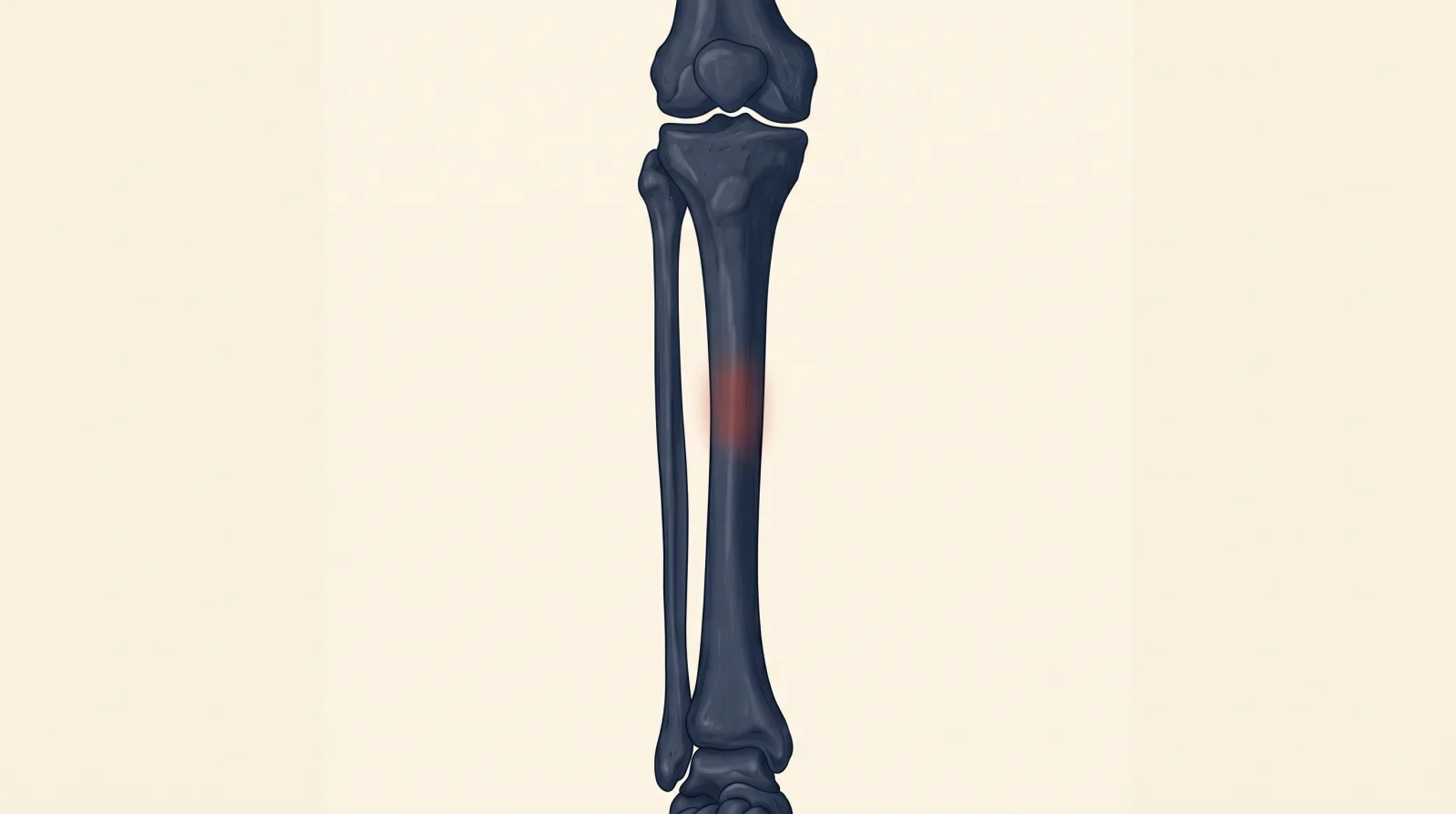
A bone stress injury is damage to bone from repetitive loading that outpaces the bone's ability to adapt. It exists on a spectrum, from an early stress reaction, where the bone is irritated and beginning to struggle, to a full stress fracture, where an actual crack has developed. It is common in runners because of the high, repetitive impact of running, particularly when training ramps up quickly.
The crucial difference from soft-tissue injuries is that bone genuinely needs reduced loading to heal. With a muscle or tendon, continued modified loading is usually part of the cure, as we describe for a calf strain returning to running. With bone, that logic flips: the bone needs the load reduced to recover. This is why recognizing it, and not treating it like an ordinary ache, matters so much.
How to tell it apart from a running ache
The patterns differ in ways that are genuinely useful to know.
An ordinary running ache, or a soft-tissue overuse problem like shin splints, tends to be more diffuse, spread over an area, and often eases as you warm up into a run.
A bone stress injury behaves differently:
- Focal pain at a specific point you can often pinpoint, rather than a diffuse ache.
- Pain that worsens the longer you run, rather than warming up and easing.
- Pain with everyday weight-bearing, at rest, or at night in more advanced cases.
That combination, focal, worsening through activity, and present at rest, is the signal to stop and get assessed rather than pushing on. The earlier this is caught, ideally at the stress-reaction stage, the faster and simpler the recovery.
Why you cannot run through it
Running through a bone stress injury risks progressing a stress reaction into a full fracture, which takes far longer to heal and, at some higher-risk sites, can lead to complications. This is one of the few running injuries where backing off the running specifically is genuinely necessary, not optional.
It runs against the grain for dedicated runners, who are used to managing through discomfort. But the bone is sending a clear message that it cannot keep up with the load, and the only way to let it recover is to reduce that load. Respecting this early is what keeps a manageable problem from becoming a serious one.
The drivers: load and fuel
Two factors dominate the development of bone stress injuries, and both are addressable.
Training load. The main driver is load that climbed faster than the bone could adapt, a spike in weekly volume, a jump in intensity or hill work, a surface change, or inadequate recovery between hard efforts. The same load-management principles that prevent other running injuries apply here.
Energy availability. This one is under-recognized and important. Low energy availability, not eating enough to match the demands of training, impairs bone health and substantially raises the risk of bone stress injuries. It is a particular concern in endurance runners and is part of a broader picture of under-fuelling that affects bone, hormones, and overall health. Addressing nutrition and ensuring adequate fuelling is central to both recovery and prevention, and it is a conversation worth having openly, often alongside a physician or dietitian.
How recovery works
Recovery starts with reducing the loading on the affected bone, often shifting to cross-training that does not load it, such as cycling, swimming, or pool running, to maintain fitness while the bone heals. As healing progresses, we reintroduce loading gradually and in stages, much like a staged return to running, watching how the bone responds.
We also address the factors that caused it: the training load that needs restructuring, and the energy availability that may need attention. Returning to full running before the bone has healed and the underlying causes are addressed simply leads back to the same injury.
Timelines vary with the bone involved and how early it was caught. An early stress reaction may settle in a matter of weeks, while an established stress fracture often takes a couple of months or more. Some sites are higher-risk and need particular caution and medical involvement.
When to get it assessed
If you have focal bone pain that worsens through a run, or that you feel at rest or at night, stop running and get it assessed promptly. Early detection meaningfully shortens the recovery and prevents progression to a more serious fracture. Suspected bone stress injuries, especially at higher-risk sites, often need imaging and medical involvement, which we coordinate.
Book a 30-minute appointment and we will assess the area, arrange imaging if warranted, address the training and fuelling factors, and build a recovery plan that gets you back to running on healthy bone.
This article is general information about bone stress injuries. It is not personal medical advice. Suspected stress fractures require medical assessment and often imaging. A regulated practitioner can confirm whether the patterns described apply to you.
Sources
- Warden et al., Management and prevention of bone stress injuries in long-distance runners, Journal of Orthopaedic & Sports Physical Therapy (2014)
- Mountjoy et al., IOC consensus statement on Relative Energy Deficiency in Sport (RED-S): 2018 update, British Journal of Sports Medicine (2018)
- College of Physical Therapists of BC (CPTBC)
Common questions
Frequently asked questions.
What is a bone stress injury?
A bone stress injury is damage to bone from repetitive loading that outpaces the bone's ability to adapt, ranging from an early stress reaction to a full stress fracture. It is common in runners and is different from soft-tissue injuries because the bone genuinely needs reduced loading to heal. Catching it early, as a stress reaction, allows a faster recovery than waiting until it becomes a fracture.
How do I know if I have a stress fracture or just a running ache?+
A bone stress injury tends to cause focal pain at a specific point that worsens the longer you run rather than warming up, and that can hurt with everyday weight-bearing, at rest, or at night. Ordinary running aches are usually more diffuse and often ease as you warm up. Focal, worsening, or rest pain is the pattern that warrants assessment and possibly imaging.
Can I run through a stress fracture?+
No. Unlike many soft-tissue injuries that benefit from continued modified loading, a bone stress injury needs reduced loading to heal, and running through it risks progressing a stress reaction into a full fracture, which takes far longer to recover. This is one of the few running injuries where backing off the running specifically is genuinely necessary.
What causes stress fractures in runners?+
The main driver is training load that climbed faster than the bone could adapt, a spike in volume, intensity, or surface, or inadequate recovery. Low energy availability, not eating enough to match training demands, also impairs bone health and raises risk significantly. Bone health factors and biomechanics can contribute. Addressing the load and energy factors is central to recovery and prevention.
How long does a stress fracture take to heal?+
It varies with the bone involved and how early it was caught. An early stress reaction may settle in a matter of weeks with reduced loading, while an established stress fracture often takes a couple of months or more. Some sites are higher-risk and need more caution. Early detection meaningfully shortens the timeline, which is why recognizing the warning signs matters.
How is a bone stress injury different from shin splints?+
Shin splints, a soft-tissue overuse problem, tend to cause a more diffuse ache along the shin that often eases as you warm up into a run. A bone stress injury causes focal pain at one specific point that worsens the longer you run and can hurt at rest or at night. Shin splints usually respond to modified running, while a bone stress injury needs the running reduced, which is why telling the two apart matters.
When does a suspected stress fracture need a doctor right away?+
Get assessed promptly if you have focal bone pain that worsens through a run, hurts with everyday walking, or wakes you at rest or at night. Suspected bone stress injuries, especially at higher-risk sites, often need imaging and medical involvement to confirm the diagnosis and guide how cautious the loading plan needs to be. Waiting it out and continuing to run risks turning a stress reaction into a full fracture.
Can I cross-train while recovering from a bone stress injury?+
Often, yes. Recovery typically shifts to activities that do not load the affected bone, such as cycling, swimming, or pool running, to maintain fitness while the bone heals. Which cross-training options are appropriate depends on which bone is involved and how it responds, so this is planned with your physiotherapist rather than chosen on your own. Loading is reintroduced gradually as the bone tolerates it.
Share this post
Copies a ready-to-publish LinkedIn post to your clipboard and opens the LinkedIn share dialog. Paste the text into the composer and publish.

Written by
Amir Ahmadi, PhDDr. Amir Ahmadi is a Registered Physiotherapist, Certified IMS Therapist and former Associate Professor. 20+ years of clinical practice in North Vancouver.
This article is for general information only and does not constitute medical advice, diagnosis, or treatment. Individual presentations vary, and assessment findings and treatment plans differ from person to person. If you are experiencing severe symptoms, neurological changes (numbness, weakness, bowel or bladder changes), or a significant trauma, contact your physician or emergency services. Care at Medstar Sport Physio & Health is provided by practitioners registered with their respective British Columbia regulatory colleges.
Filed under
- bone-stress-injury
- stress-fracture
- running
- load-management
- north-vancouver