
Shoulder
Shoulder Impingement | North Vancouver
A sharp pinch when your arm passes shoulder height, reaching a top shelf, pulling a shirt overhead, finishing a swim stroke. We open up the space the tendons travel through and retrain the shoulder blade that's been crowding it.
What it is
Understanding your shoulder impingement.
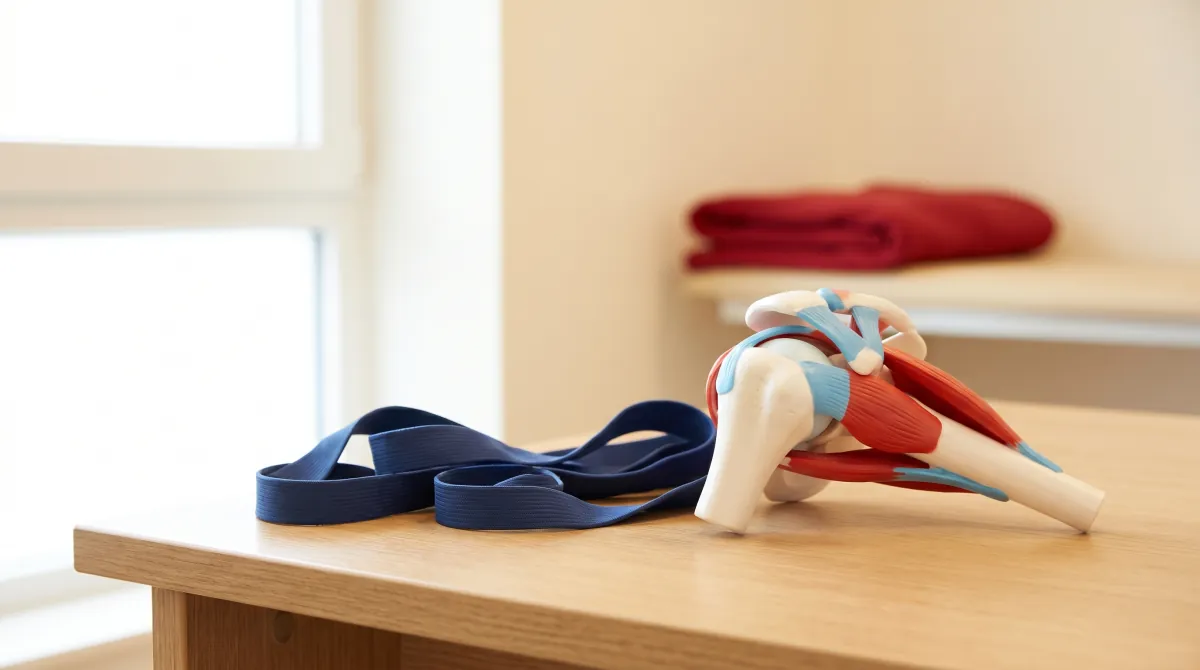
Shoulder impingement is the pinch you feel in a specific slice of the lift, usually between roughly 60 and 120 degrees, the so-called painful arc, when you raise your arm out to the side or reach overhead. Below it and above it can feel fine; it's the middle of the range that catches. What's getting squeezed is the rotator cuff tendon and the small fluid sac (the subacromial bursa) that cushions it, compressed against the bony roof of the shoulder as the arm travels up. As the tendons rub against the bone they become irritated and inflamed, so alongside the pain you can get some swelling and difficulty moving the shoulder, and left unchecked it can limit your reach for everyday tasks like dressing, lifting, or carrying. At Medstar Sport Physio in North Vancouver, we assess and treat this through a one-on-one physiotherapy appointment, confirming the pattern and building a plan from there. We see patients from across Vancouver and the North Shore, many of whom cross Lions Gate Bridge or take the SeaBus for treatment here.
Most of the time the space itself isn't the original problem, the way the shoulder blade moves is. When the scapula doesn't tilt and rotate out of the way as the arm climbs, the gap under the acromion stays narrow and the tendon keeps getting nipped. Rounded posture at a desk, a fatigued or poorly-timed lower trapezius and serratus, and a long week of overhead reaching all conspire to keep that gap small.
That's why impingement and a rotator cuff problem aren't the same conversation, even though they overlap. Impingement is a mechanical pinch that irritates the tendon; left to grind, it can tip a healthy tendon into tendinopathy or contribute to a tear. We treat the pinch early so it doesn't graduate into the next thing.
What to expect
Impingement caught early often eases noticeably within 4 to 6 weeks once scapular control improves and the irritating overhead volume is managed. Cases that have been grumbling for months (or where the tendon has already become tendinopathic) take longer and sometimes benefit from shockwave. Your physiotherapist sets the next milestone after assessing your painful arc and adjusts as it opens up.

Book a sports assessment with Ali Shafiei
Ali leads sport and orthopaedic physiotherapy at the clinic: manual therapy, IMS dry needling, and exercise-based rehab built around getting you back to your sport, with pain relief along the way. He is taking new patients with same-week availability.
Get a plan
Not sure if we're the right fit?
Send us a quick note about what's going on. A physiotherapist will read it personally and reply with what they'd recommend. No commitment to book.
Common questions
About shoulder impingement.
How is impingement different from a rotator cuff tear?
Impingement is a mechanical pinch, the tendon and bursa getting compressed under the bony roof as your arm passes through the mid-range. A tear is structural damage to the tendon itself. The two sit on the same spectrum, which is why they get confused: untreated impingement can wear a tendon down toward tendinopathy and, over years, contribute to a tear, but most impingement we see is reversible with scapular retraining and load management. If your case points toward a true cuff problem, we say so. See our rotator cuff page for that side of it.
Why does it only hurt in the middle of lifting my arm?+
That's the painful arc, and it's the classic fingerprint of impingement. The space under the acromion is narrowest as the arm passes through roughly shoulder height, so that's where the tendon gets pinched. Below and above that range there's more room, so it can feel fine. The pattern is part of how we confirm what's going on.
Should I just stop reaching overhead until it settles?+
Cutting back on the volume that flares it (a week of painting ceilings, a sudden jump in swim laps) makes sense short-term. But avoiding overhead reach entirely tends to leave the shoulder weak and the pinch waiting. The fix is restoring the mechanics so the space stays open, then rebuilding the reach. We'll set what to back off and what to keep doing.
I do a lot of overhead gym work and climbing, will I have to give it up?+
Almost never permanently. North Shore climbers and lifters are a big part of who we see for this. The goal is to fix the scapular timing and load tolerance so your shoulder handles the volume, then phase you back into pressing and overhanging holds. We adjust the plan to what your sport actually demands.
Do you direct-bill extended health?+
Yes, direct billing for most major extended-health insurers, plus ICBC and WorkSafeBC, and we handle the paperwork. Shoulder impingement often builds up from a long week of overhead reaching, overhead gym work, or climbing, so it isn't always a straightforward extended-health claim. Whatever the source, we sort out the right coverage and coordinate the claim so you can focus on the rehab.
What's actually causing my shoulder to pinch?+
Shoulder impingement happens when the rotator cuff tendon and the small fluid sac cushioning it get compressed against the bony roof of the shoulder as your arm lifts. Most of the time the real problem isn't the space itself, it's how the shoulder blade moves. When the scapula doesn't tilt and rotate out of the way as the arm climbs, the gap under the acromion stays narrow and the tendon keeps getting nipped.
What does treatment for shoulder impingement look like?+
Treatment centres on scapular retraining to restore the upward rotation and posterior tilt that reopens the space under the acromion, paired with manual therapy to free a stiff posterior capsule. We add graded loading through the painful arc, starting with isometrics and building toward full overhead reach, plus posture and workstation coaching so a desk job doesn't undo the progress between visits.
How long until shoulder impingement feels better?+
Impingement caught early often eases noticeably within 4 to 6 weeks once scapular control improves and the irritating overhead volume is managed. Cases that have been grumbling for months, or where the tendon has already become tendinopathic, take longer and sometimes benefit from shockwave. Your physiotherapist sets the next milestone after assessing your painful arc.

Reviewed by Amir Ahmadi, PhD, MSc PT, Registered Physiotherapist, Certified IMS Therapist, College of Physical Therapists of British Columbia (CPTBC). Last reviewed July 2026.
This page is for general information only and does not constitute medical advice, diagnosis, or treatment. Individual presentations vary, and assessment findings and treatment plans differ from person to person. If you are experiencing severe symptoms, neurological changes (numbness, weakness, bowel or bladder changes), or a significant trauma, contact your physician or emergency services. Physiotherapy at Medstar Sport Physio & Health is provided by physiotherapists registered with the College of Physical Therapists of British Columbia (CPTBC).
Related reading
- Rotator cuff & shoulder pain, tears and tendinopathy, the structural side of shoulder trouble →
- IMS dry needling, release the upper trap and cuff trigger points that hike the shoulder →
- Sport physiotherapy: the manual therapy and scapular-retraining plan behind the fix →
- Shockwave therapy, for an irritable subacromial tendon that hasn't settled with loading →