Calcific tendon
Soft Tissue Calcifications | North Vancouver
A shoulder that catches, grinds, and aches for no clear reason can be a chalky calcium deposit lodged in a tendon. Shockwave and the right loading often settle it without the operating room.
What it is
Understanding your soft tissue calcifications.
Soft tissue calcification is what happens when small, chalky deposits of calcium build up inside a tendon, muscle, or ligament, somewhere it doesn't belong. The most familiar version is calcific tendinitis of the shoulder, where a deposit forms in the rotator cuff, but it also turns up around the hip, knee, and elbow. The deposit can leave the area stiff, tender, and surprisingly painful, especially as you move through certain angles. At Medstar Sport Physio in North Vancouver, we assess and treat this through a one-on-one physiotherapy appointment, confirming the pattern and building a plan from there. We see patients from across Vancouver and the North Shore, many of whom cross Lions Gate Bridge or take the SeaBus for treatment here.
These deposits often develop quietly. For a long time you might feel nothing, then a tendon that's been slowly accumulating calcium starts to catch, click, or grind, and the discomfort builds. When a deposit is in an active, irritable phase, the pain can flare sharply, especially overhead with the shoulder, and it can disturb sleep.
The body tends to lay down calcium in response to repetitive stress, minor injuries, or a tendon with a poor blood supply that's been struggling to heal. Age-related tissue changes and some metabolic factors raise the odds. Once a deposit hardens, it can stiffen the surrounding tissue, sap strength, and irritate the structures around it. That is what brings most people in.
What to expect
Calcific tendon pain runs in phases, and the timeline depends on which phase you're in. An irritable, acutely painful deposit can be the most uncomfortable but also the one most likely to resolve as the body reabsorbs it. With shockwave and a loading program, many people see meaningful improvement over four to eight weeks. Stubborn deposits are slower, and a small number need a referral back to your physician for imaging-guided procedures or, rarely, surgery. We'll be straight with you about whether conservative care is the right route or whether it's time to involve a specialist.
Get a plan
Not sure if we're the right fit?
Send us a quick note about what's going on. A physiotherapist will read it personally and reply with what they'd recommend. No commitment to book.
Common questions
About soft tissue calcifications.
How do you know it's a calcium deposit and not just a strain?
The pattern is a clue. A deep, catching shoulder ache that flares without a clear injury, often worse overhead and at night, points that way, but a deposit is confirmed on imaging (X-ray or ultrasound). We assess the tendon clinically; if the picture fits calcific tendinitis and you haven't had imaging, we'll coordinate with your physician to confirm it before committing to a long treatment plan.
Will shockwave therapy actually break down the deposit?+
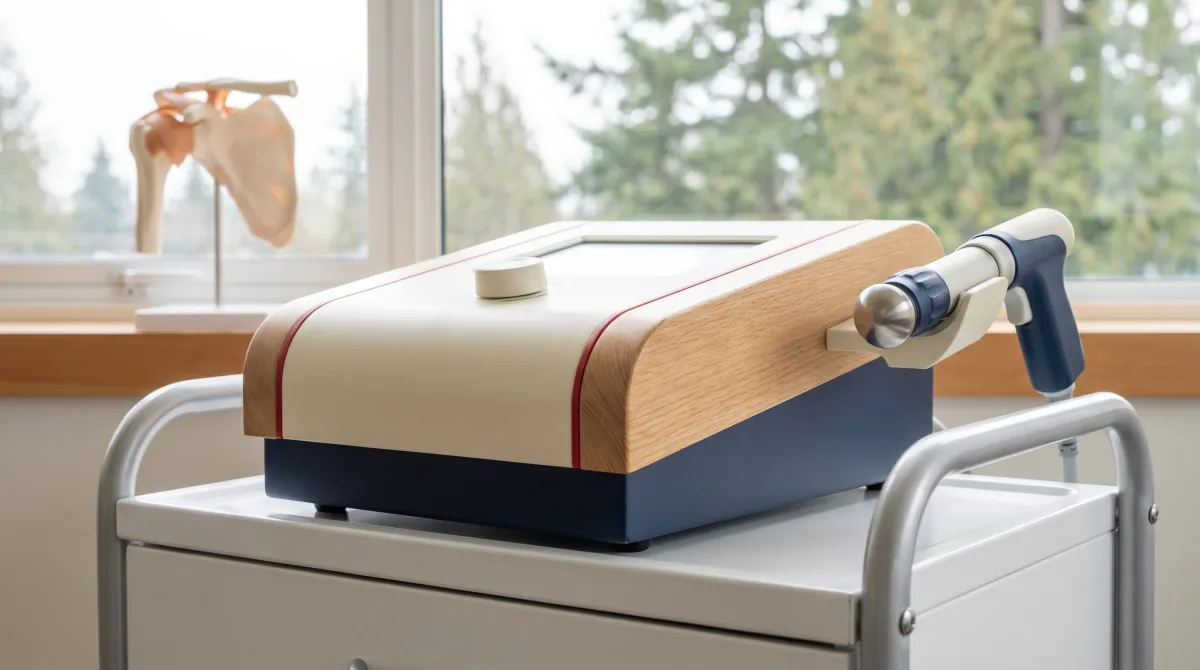
For many people, yes. Shockwave delivers focused acoustic energy that can fragment a calcium deposit and stimulate the tendon to reabsorb and repair it. It works best on deposits that are accessible and in the right phase, and it's typically done over several sessions paired with rehab. It isn't guaranteed for every deposit, and we'll tell you honestly if yours looks like a poor candidate.
Is the treatment painful?+
Shockwave can be uncomfortable over a sensitive deposit. Most people describe it as a tolerable, deep tapping sensation, and we adjust the intensity to what you can handle. Any soreness afterwards usually settles within a day or two. The rehab exercises are kept within a range that doesn't aggravate the tendon.
Do calcium deposits come back after they clear?+
Sometimes a deposit reabsorbs and doesn't return. Sometimes the underlying tendon issue that allowed it to form is still there. That's why we don't stop at breaking down the deposit, we work on the strength, mobility, and loading habits that protect the tendon, which is your best defence against a repeat.
What are soft tissue calcifications?+
Soft tissue calcification is what happens when small, chalky deposits of calcium build up inside a tendon, muscle, or ligament, somewhere it doesn't belong. The most familiar version is calcific tendinitis of the shoulder, forming in the rotator cuff, but deposits also turn up around the hip, knee, and elbow. The deposit can leave the area stiff, tender, and surprisingly painful through certain movement angles.
What causes a calcium deposit to form in a tendon?+
The body tends to lay down calcium in a tendon in response to repetitive stress, minor injuries, or a tendon with a poor blood supply that's been struggling to heal. Age-related tissue changes and some metabolic factors raise the odds. Once a deposit hardens, it can stiffen the surrounding tissue, sap strength, and irritate the structures around it, which is what brings most people in for soft tissue calcification treatment.
Is shockwave the only treatment for a calcium deposit?+
No. Shockwave leads treatment because it can break down the deposit and kick-start the tendon's own healing, but we pair it with manual therapy, IMS, and targeted stretching to restore the glide and range the stiff tendon has lost. A graded strengthening program supports the tendon so it isn't constantly overloaded, and Class IV laser can help settle pain when the deposit is in its irritable phase.
How long does it take for a calcium deposit to settle down?+
It depends on which phase the deposit is in. An irritable, acutely painful deposit is the most uncomfortable but also the most likely to resolve as the body reabsorbs it. With shockwave and a loading program, many people see meaningful improvement over four to eight weeks for this soft tissue calcification. Stubborn deposits are slower, and a small number need referral back to your physician for imaging-guided procedures.

Reviewed by Amir Ahmadi, PhD, MSc PT, Registered Physiotherapist, Certified IMS Therapist, College of Physical Therapists of British Columbia (CPTBC). Last reviewed July 2026.
This page is for general information only and does not constitute medical advice, diagnosis, or treatment. Individual presentations vary, and assessment findings and treatment plans differ from person to person. If you are experiencing severe symptoms, neurological changes (numbness, weakness, bowel or bladder changes), or a significant trauma, contact your physician or emergency services. Physiotherapy at Medstar Sport Physio & Health is provided by physiotherapists registered with the College of Physical Therapists of British Columbia (CPTBC).