
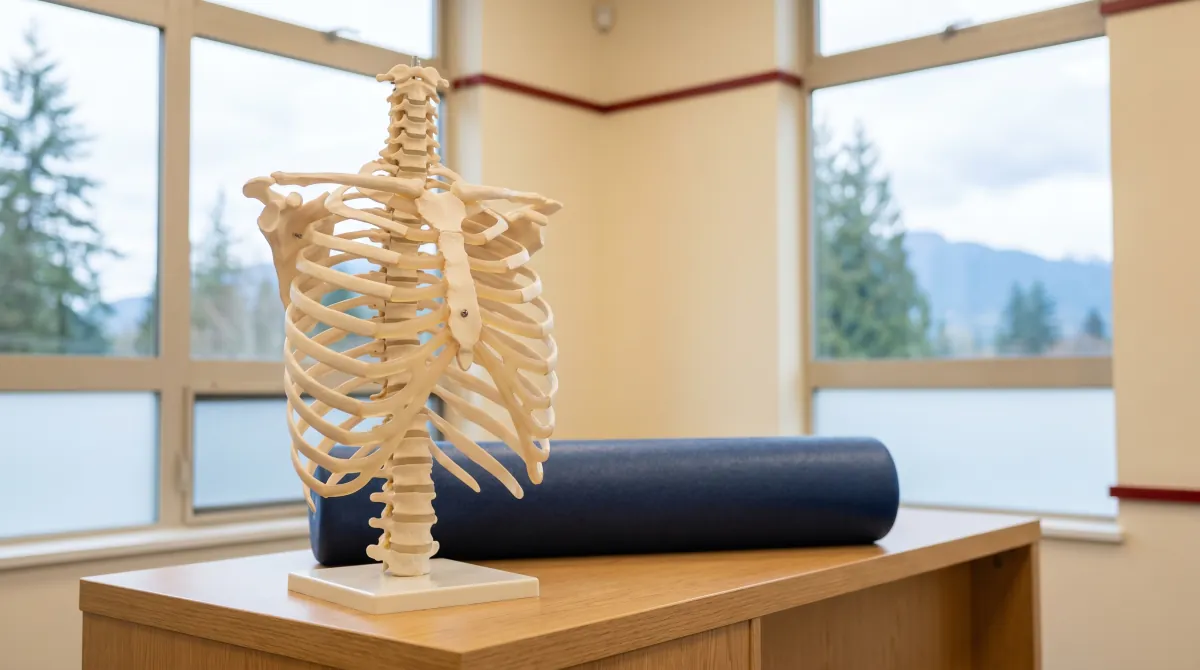
Rib & Chest
Chest Wall & Rib Pain | North Vancouver
A sharp catch when you take a deep breath, twist, or roll over in bed. Once a physician has ruled out the heart, most chest-wall and rib pain comes from joints and muscles, and it responds well to hands-on care.
What it is
Understanding your chest wall / rib pain.
Intercostal muscle strain (damage to the muscles running between the ribs) is one of the most common causes of sharp chest-wall pain that bites with every breath, cough, or twist. It tends to follow a sports collision, a fall, a reaching awkward lift, or a long run of forceful coughing. The pain can feel like a tight band, a stabbing catch on inhale, or a deep ache that spills into the back, and it worsens predictably on twisting or reaching overhead. Although chest pain understandably worries people, a musculoskeletal cause is the usual culprit once the heart has been cleared. At Medstar Sport Physio in North Vancouver, we assess and treat this through a one-on-one physiotherapy appointment, confirming the pattern and building a plan from there. We see patients from across Vancouver and the North Shore, many of whom cross Lions Gate Bridge or take the SeaBus for treatment here.
The pain can come from a strained chest or back muscle, from irritation of the small joints where the ribs meet the spine and the breastbone, or from a direct knock to the ribs themselves. Slumped posture and repetitive twisting load those joints day after day, and a bout of coughing or a chest infection can inflame the muscles and joints that wrap the rib cage.
Over time, a stiff rib joint or a guarded set of intercostal muscles can make the simple act of breathing feel restricted. People start taking shallower breaths to dodge the catch, which keeps the area tight and slows things down. That loop is straightforward to interrupt once you know it's happening.
What to expect
A simple chest-wall or rib-joint irritation often eases noticeably within two to four visits as the joint motion and breathing pattern return. A genuine rib bruise or a recovering crack takes longer to feel fully settled, because the bone and cartilage set their own pace, but the breathing work and mobilization make those weeks far more comfortable. Your physiotherapist will pace the return to sport around your symptoms, not a fixed date.
Get a plan
Not sure if we're the right fit?
Send us a quick note about what's going on. A physiotherapist will read it personally and reply with what they'd recommend. No commitment to book.
Common questions
About chest wall / rib pain.
How do I know this isn't my heart?
You don't, on your own, and that's why a physician needs to clear you first. Chest pain that comes with shortness of breath, sweating, nausea, or pain spreading into the jaw or left arm is a medical emergency. Call 911. Once cardiac causes have been ruled out, we screen again at the first visit and treat the musculoskeletal causes that remain.
It hurts every time I breathe in. Should I just breathe shallowly until it heals?+
That's the instinct, but it tends to prolong things. Shallow guarding keeps the rib joints stiff and the muscles tight, and the shallow-breath pattern is exactly what slows recovery down. We coach a comfortable, gradual return to fuller breathing, within your pain limits, alongside gentle rib and thoracic-spine mobilization, because keeping the rib cage moving is part of the recovery. Most straightforward cases notice the catch easing within two to four visits once that breathing pattern starts to change.
I cracked a rib mountain biking on Fromme. Can physio help, or do I just wait?+
Both. A confirmed rib fracture needs time to heal and your physician should be in the loop, but physiotherapy still has a role: protecting the area, keeping the breathing pattern healthy to avoid a chest infection, and guiding the return to riding once the bone is settled. We work alongside your medical care, not instead of it.
Can a chest infection or bad cough really cause rib pain?+
Yes. A long run of forceful coughing repeatedly loads the rib joints and intercostal muscles and can leave them inflamed and sore well after the cough has gone. That kind of post-cough rib pain responds nicely to mobilization and a short breathing-and-posture program, the same gentle rib and thoracic-spine work used for a strain from a fall or a sports collision. Most people notice the ache and the catch on inhale easing within two to four visits.
How long does an intercostal muscle strain take to heal?+
A straightforward intercostal muscle strain, one that comes on after a single incident like a cough, a fall, or a collision, typically settles noticeably within two to four physiotherapy visits. The breathing-retraining and rib-joint work reduces the catch quickly. A more significant strain, or one that has been guarded for weeks and turned into a stiffness pattern, may take three to six weeks of consistent treatment. A confirmed rib fracture follows the bone's own timeline (usually six to eight weeks minimum) but physiotherapy still eases the process by keeping the breathing pattern healthy throughout.
Can physiotherapy fix intercostal muscle strain?+
Yes. Intercostal muscle strain responds well to physiotherapy, specifically rib-joint mobilization to restore normal rib gliding and breathing retraining to break the shallow-breath guarding pattern. Most straightforward cases improve noticeably within two to four visits. If the strain came from a cough, a collision, or a reach, that is a good sign for a fast recovery.
Can bad posture or repetitive twisting cause chest and rib pain on its own, without an injury?+
Yes. Slumped posture and repetitive twisting load the small joints where the ribs meet the spine and breastbone day after day, and that daily load can inflame them even without a single incident like a fall or a cough. Posture and twisting-mechanics correction is part of the treatment plan specifically to take that ongoing load off the irritated joints.
Is there anything I can do for support while a rib or chest-wall injury is still sore?+
Taping can offer short-term support when a deep breath or a cough still bites, alongside the rib mobilization and breathing work. It is a comfort measure to get through the sorest days, not a substitute for the underlying treatment, which is what actually restores normal rib motion and breathing.

Reviewed by Amir Ahmadi, PhD, MSc PT, Registered Physiotherapist, Certified IMS Therapist, College of Physical Therapists of British Columbia (CPTBC). Last reviewed July 2026.
This page is for general information only and does not constitute medical advice, diagnosis, or treatment. Individual presentations vary, and assessment findings and treatment plans differ from person to person. If you are experiencing severe symptoms, neurological changes (numbness, weakness, bowel or bladder changes), or a significant trauma, contact your physician or emergency services. Physiotherapy at Medstar Sport Physio & Health is provided by physiotherapists registered with the College of Physical Therapists of British Columbia (CPTBC).