
Growing athletes
Osgood-Schlatter Disease | North Vancouver
Your kid's complaining about a sore, swollen bump just below the kneecap that flares with every soccer practice. It's a growth-plate thing, it's common, and the goal is keeping them in their sport while the knee settles.
What it is
Understanding your osgood-schlatter disease.
Osgood-Schlatter is one of the most common reasons a 10-to-15-year-old turns up with knee pain. The tendon that runs from the kneecap down to the top of the shin pulls on a patch of bone that's still growing, and the spot where it attaches gets irritated, tender, and sometimes visibly swollen, leaving a bony bump on the front of the shin that doesn't go away. At Medstar Sport Physio in North Vancouver, we assess and treat this through a one-on-one physiotherapy appointment, confirming the pattern and building a plan from there. We see patients from across Vancouver and the North Shore, many of whom cross Lions Gate Bridge or take the SeaBus for treatment here.
It flares with exactly the things active kids love: running, jumping, sprinting, and kneeling, and it usually eases with rest. During a growth spurt the bones lengthen faster than the muscles and tendons can keep up, so the quad and tendon end up tight and tugging harder on a growth plate that's already a soft spot. Repeated hard efforts, such as back-to-back practices or a tournament weekend, pile load onto that junction faster than it can settle. Boys tend to be affected a little more often than girls, and the symptoms generally settle as growth slows.
The reassuring part is what this isn't. It isn't a tear, it isn't damaging the joint, and it nearly always settles once growth finishes and the growth plate fuses. The job in the meantime is managing load so the pain stays tolerable and the young athlete keeps doing the sport that matters to them.
What to expect
Most kids feel meaningfully better within a few weeks of managing load and adding the right strength and mobility work, even though the bony bump can stick around. Symptoms tend to come and go with growth spurts and busy seasons until the growth plate finishes maturing, so the plan is about staying in sport through it.
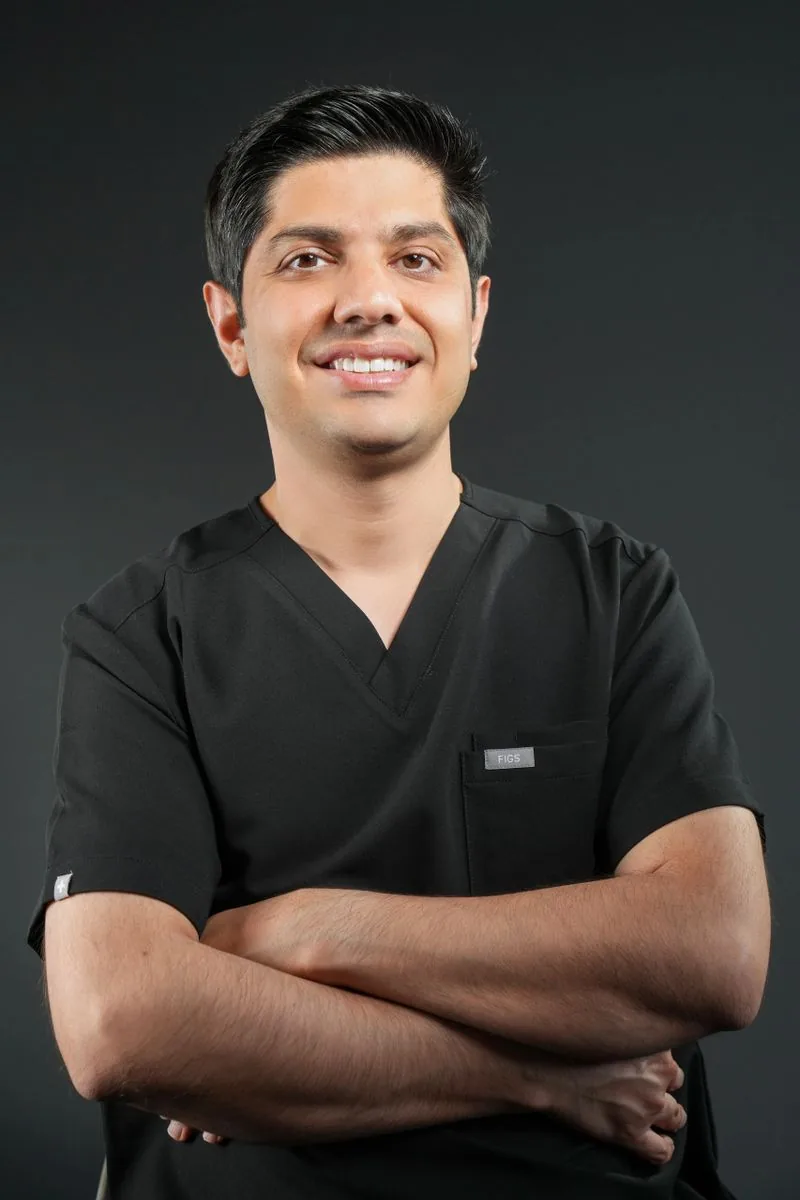
Book a sports assessment with Ali Shafiei
Ali leads sport and orthopaedic physiotherapy at the clinic: manual therapy, IMS dry needling, and exercise-based rehab built around getting you back to your sport, with pain relief along the way. He is taking new patients with same-week availability.
Get a plan
Not sure if we're the right fit?
Send us a quick note about what's going on. A physiotherapist will read it personally and reply with what they'd recommend. No commitment to book.
Common questions
About osgood-schlatter disease.
Does my child have to stop playing sport?
Usually not entirely. Complete rest tends to mean a deconditioned, frustrated kid who flares again the moment they return. The better approach is managing the dose, easing back during heavy weeks and keeping the strength work going, so they stay in the game while the knee settles.
Will the bump on the shin go away?+
Often the bony lump stays even after the pain has gone, and that's normal, because it's the bone that built up where the tendon pulled on the growth plate at the top of the shin. What matters is that it's no longer sore. The pain reliably settles once the growth plate finishes maturing, and it isn't a tear or damage to the joint.
How long does Osgood-Schlatter last?+
It typically resolves on its own once growth finishes, which can be anywhere from several months to a couple of years depending on where your child is in their growth spurt. Good load management and rehab make that stretch far more comfortable and keep them in their sport.
My teen plays soccer and basketball year-round: is that the problem?+
Back-to-back jumping and sprinting seasons with no real off-period are a classic trigger, because the tendon attachment never gets a quiet stretch to settle. We don't usually tell families to quit a sport. We look at how to space the load across the calendar so the knee can keep up.
What exactly is Osgood-Schlatter disease?+
Osgood-Schlatter is one of the most common reasons a 10-to-15-year-old turns up with knee pain. The tendon that runs from the kneecap down to the top of the shin pulls on a patch of bone that's still growing, and the spot where it attaches gets irritated, tender, and sometimes visibly swollen into a bony bump on the front of the shin.
Is Osgood-Schlatter a serious injury?+
No. It isn't a tear, and it isn't damaging the joint. Osgood-Schlatter nearly always settles once growth finishes and the growth plate fuses. The job in the meantime is managing load so the pain stays tolerable and the young athlete keeps doing the sport that matters to them, not treating it like a structural injury.
What activities make Osgood-Schlatter worse?+
It flares with exactly the things active kids love: running, jumping, sprinting, and kneeling, and it usually eases with rest. During a growth spurt the bones lengthen faster than the muscles and tendons can keep up, so the quad and tendon end up tight and tugging harder on a growth plate that's already a soft spot.
What does physiotherapy for Osgood-Schlatter involve?+
We start with an assessment that confirms it's Osgood-Schlatter and rules out other causes of growing-athlete knee pain, then use manual therapy and targeted stretching for the tight quads, hamstrings, and calves that crank tension onto the tendon. Strengthening for the quads, hamstrings, and hips is scaled for a growing body, with a staged return to full practice once symptoms calm.

Reviewed by Amir Ahmadi, PhD, MSc PT, Registered Physiotherapist, Certified IMS Therapist, College of Physical Therapists of British Columbia (CPTBC). Last reviewed July 2026.
This page is for general information only and does not constitute medical advice, diagnosis, or treatment. Individual presentations vary, and assessment findings and treatment plans differ from person to person. If you are experiencing severe symptoms, neurological changes (numbness, weakness, bowel or bladder changes), or a significant trauma, contact your physician or emergency services. Physiotherapy at Medstar Sport Physio & Health is provided by physiotherapists registered with the College of Physical Therapists of British Columbia (CPTBC).